Is American Express Gold a Credit Card?


Introduction
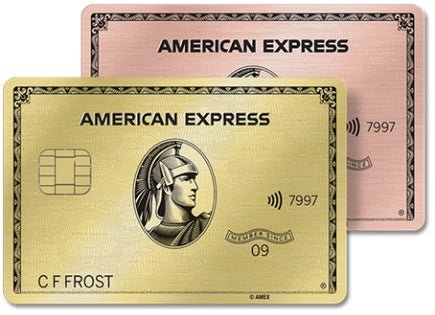
Whether the American Express Gold Card is a credit card is a common question for anyone comparing premium rewards cards. The answer is nuanced because this card occupies a unique space in the financial world. Historically, the American Express Gold Card was a traditional charge card, which required the balance to be paid in full every month. Today, it functions as a hybrid. While it still retains the core characteristics of a charge card, such as having no preset spending limit, it also offers features that allow users to carry a balance on certain purchases with interest.
MoneyAtlas tracks these distinctions to help you understand exactly how your spending and repayment will work. This article explores the mechanical differences between the American Express Gold Card and a traditional credit card, examines the "Pay Over Time" feature, and breaks down the rewards structure. Understanding these details is essential for anyone deciding if this specific financial tool fits their spending habits.
The Evolution of the Charge Card
To understand the American Express Gold Card, it helps to understand the history of charge cards. For decades, American Express was famous for products that did not allow users to carry a debt from month to month. You would charge your travel or dining expenses and pay the entire bill when the statement arrived. This model appealed to disciplined spenders who wanted to avoid interest charges and enjoyed the prestige of a card that signaled financial stability.
The American Express Gold Card review still carries this "pay in full" DNA. When you look at the card's terms, you will see that it is often referred to simply as a "Card" rather than a "Credit Card." This distinction matters for how the card is managed and how it appears on a credit report. Unlike a traditional credit card with a hard ceiling, like a $5,000 limit, the Gold Card adapts to your behavior.
No Preset Spending Limit Explained
One of the defining features of the American Express Gold Card is that it has no preset spending limit (NPSL). This is frequently misunderstood as having an "unlimited" limit, which is not the case. Instead, your spending power is flexible. It adjusts based on your use of the card, your payment history, your credit record, and your financial resources known to the issuer.
This flexibility can be an advantage for someone who needs to make a large one-time purchase that might exceed the fixed limit on a standard credit card. However, because the limit is not fixed, the issuer can decline a transaction if it significantly deviates from your established spending patterns. MoneyAtlas suggests using the "Check Spending Power" tool available in the card app before attempting an unusually large purchase to ensure it will be approved.
How the Pay Over Time Feature Works
While the Gold Card is technically a charge card, the introduction of the "Pay Over Time" feature has blurred the lines, making it function much like a traditional credit card. This feature allows cardholders to carry a balance on eligible purchases of $100 or more, subject to an interest rate.
When you use the American Express Gold Card, you generally have two ways to handle your statement:
- Pay in Full: This is the traditional charge card method. You pay the entire "New Balance" by the due date and incur no interest.
- Pay Over Time: Eligible purchases are placed into a Pay Over Time balance. You can choose to pay the "Minimum Amount Due," which includes a portion of that balance plus interest, similar to how a credit card works.
The interest rate for the Pay Over Time feature is a variable Annual Percentage Rate (APR). As of recent data, these rates are competitive with other premium rewards cards but can vary based on your creditworthiness at the time of application. It is important to understand how credit card APR works before deciding to carry a balance.
Reward Tiers and Earning Potential
The primary reason many people consider the American Express Gold Card is its aggressive rewards structure, particularly for food and travel. The card earns Membership Rewards points, which are widely considered one of the most flexible loyalty currencies available.
The earning rates are currently structured as follows:
- 4X Points at Restaurants: This applies to restaurants worldwide and includes takeout and delivery in the U.S. This rate applies on up to $50,000 in purchases per calendar year, then it drops to 1X.
- 4X Points at U.S. Supermarkets: This is a significant draw for households. The 4X rate applies on up to $25,000 in purchases per calendar year, then 1X.
- 3X Points on Flights: This applies to flights booked directly with airlines or through the travel portal.
- 2X Points on Other Travel: This includes prepaid car rentals and other bookings made through the travel portal.
- 1X Points on All Other Purchases: This is the base rate for any spending that does not fall into the categories above.
For someone spending $1,000 a month on groceries and $500 a month on dining, the card could generate 72,000 Membership Rewards points in a single year from those two categories alone. When comparing this to a standard 1% or 1.5% cash back card, the value proposition of the Gold Card becomes clear for those whose budgets are food-heavy. You can also browse cash back card comparisons to evaluate simpler rewards structures.
Evaluating the $325 Annual Fee
The American Express Gold Card carries a $325 annual fee. For many, this is the most significant hurdle when deciding if the card is a good fit. To determine if the fee is justifiable, you must look at the annual statement credits that come with the card. If you already spend money at the participating merchants, these credits can effectively lower the "net" cost of the card.
A useful way to evaluate the tradeoff is to compare credit card annual fees, interest rates, and rewards before applying.
Annual Statement Credits
The card offers several credits that are distributed monthly or semi-annually. It is important to note that most of these require enrollment through the card app or website before they can be used.
- $120 Dining Credit: This is delivered as up to $10 per month in statement credits when you use the card at participating partners. These currently include Grubhub, The Cheesecake Factory, Five Guys, and Buffalo Wild Wings.
- $120 Uber Cash: By adding your Gold Card to your Uber account, you receive $10 in Uber Cash each month. This can be used for Uber Eats orders or Uber rides in the U.S.
- $100 Resy Credit: This is a newer addition to the card. It provides up to $50 in statement credits semi-annually, from January to June and July to December, for purchases at U.S. Resy restaurants.
- $84 Dunkin' Credit: Cardholders can receive up to $7 per month in statement credits for purchases at U.S. Dunkin' locations.
If a cardholder uses every dollar of these credits, they receive $424 in annual value, which more than offsets the $325 annual fee. However, if you do not live near these merchants or do not use delivery services, the credits may hold little to no value for you.
Credit Score and Application Requirements
Because the American Express Gold Card is a premium product, it generally requires a good to excellent credit score for approval. Usually, this means a score in the 670 to 850 range, though the issuer looks at your entire financial profile, not just a single number.
One unique aspect of applying for premium cards is the "Apply with Confidence" tool. This allows you to see if you are approved for the card with a soft credit pull, which does not impact your credit score. If you are approved and choose to accept the card, only then will a hard pull be performed, which may have a temporary impact on your score.
Impact on Credit Utilization
A traditional credit card affects your credit score largely through your "credit utilization ratio." This is the percentage of your total available credit that you are currently using. If you have a $10,000 limit and a $1,000 balance, your utilization is 10%.
Because the American Express Gold Card has no preset spending limit, it is treated differently by credit scoring models like FICO. Since there is no "limit" to compare your balance against, the balance on a charge card often does not factor into the utilization revolving credit calculation in the same way a traditional credit card does. This can be beneficial for someone who puts large amounts of spending on their card each month, as it will not "max out" their utilization and potentially lower their score.
For additional context, read about how APR affects credit card costs.
Comparing Amex Gold to Traditional Credit Cards
When deciding between the Gold Card and a traditional credit card, the choice often comes down to how you plan to manage your debt and what you spend your money on.
For someone who wants a simple way to build a credit limit over time, a traditional credit card might be more straightforward. For those who travel and spend heavily on dining, the specific perks of the Gold Card are often more lucrative. You can compare the best credit cards side by side to see which rewards structure aligns with your annual budget.
Travel Benefits and Protections
Beyond the points and credits, the American Express Gold Card provides a suite of travel protections and benefits that are typical of high-end cards. These features offer peace of mind but often go unused because cardholders are unaware of them.
- The Hotel Collection: When you book a stay of two nights or more through the travel portal, you can receive a $100 credit for qualifying on-property charges like spa services or dining. You may also be eligible for room upgrades upon arrival if available.
- Hertz Five Star Status: Cardholders can enroll to receive elevated status with Hertz, which includes benefits like skipping the counter and potential vehicle upgrades.
- Baggage Insurance Plan: If your luggage is lost, damaged, or stolen while traveling on a common carrier, such as a plane or train, you may be covered. Coverage limits generally reach up to $1,250 for carry-on bags and $500 for checked bags.
- Car Rental Loss and Damage Insurance: This provides secondary coverage against theft or damage to most rental vehicles. You must decline the rental company's collision damage waiver and pay for the rental with your card.
It is important to remember that these are insurance products. They come with specific terms, conditions, and exclusions. For example, the car rental insurance is secondary, meaning it pays out only after your personal auto insurance has been exhausted.
How to Redeem Membership Rewards Points
The points you earn with the American Express Gold Card are part of the Membership Rewards program. These points are highly valued because they do not expire as long as you have an active account and they can be redeemed in several ways.
Transfer to Travel Partners
The most valuable way to use your points is often by transferring them to one of the card's many airline or hotel partners. Most transfers happen at a 1:1 ratio. Partners include:
- Delta SkyMiles
- British Airways Executive Club
- Air France/KLM Flying Blue
- Hilton Honors
- Marriott Bonvoy
By transferring points to an airline and booking a business class seat or a last-minute flight, you can often get a value of 2 cents per point or higher. This is significantly better than the standard 0.6 to 1.0 cent per point you might get from other redemption methods.
Other Redemption Methods
If you prefer simplicity over maximizing point value, you can use your points for:
- Booking through the travel portal: Points are generally worth 1 cent each when used for flights.
- Statement Credits: This is usually the least valuable option, often yielding only 0.6 cents per point.
- Gift Cards: Value varies depending on the retailer but generally stays around 1 cent per point.
- Amazon or PayPal Checkout: You can link your points to pay for purchases, though the value is often lower than 1 cent per point.
Is the American Express Gold Card Right for You?
The American Express Gold Card is not a "one size fits all" financial product. It is a specialized tool designed for a specific type of consumer. To decide if it is right for you, consider these three factors.
1. Your Spending Categories
If you spend less than $500 a month on groceries and dining combined, it will be difficult to earn enough points to justify the annual fee. However, if those are your two largest spending categories after housing, the 4X earning rate is among the best in the industry.
2. Your Repayment Habits
If you are someone who frequently carries a balance on your credit cards, the American Express Gold Card might not be the best choice. While it has the Pay Over Time feature, the card's primary design encourages paying in full. If you need a card for long-term financing, a low-interest traditional credit card or a card with a 0% introductory APR is worth comparing instead. You can compare balance transfer card options when managing existing credit card debt.
3. Your Ability to Use Credits
Be honest about your lifestyle. Do you already use Uber or order from Grubhub? If you do, the $240 in combined credits is essentially "found money." If you find yourself ordering takeout just to use a credit you would not have otherwise spent, the card may actually be costing you more than it saves.
Conclusion
The American Express Gold Card is a hybrid financial product that offers the flexibility of no preset spending limit with the modern convenience of carrying a balance through Pay Over Time. While it is technically a charge card, its functionality mirrors a credit card for many users. The $325 annual fee is high, but for those who maximize the 4X points on dining and supermarkets and utilize the monthly statement credits, it can be a highly profitable addition to a wallet.
If you are looking for a card that rewards your everyday lifestyle and you have the credit profile to qualify, the Gold Card is a strong contender. However, always compare it against other premium cards that might offer different travel perks or lower fees. MoneyAtlas provides the tools to compare travel credit cards side by side so you can see which one earns the most based on your specific spending data.
FAQ
MoneyAtlas Staff
Articles and reviews from the MoneyAtlas editorial team — independent research on credit cards, banking, loans, insurance, and investing.
Related Articles

How to Cancel Your American Express Gold Card
Learn how to cancel American Express Gold card accounts without losing points. Step-by-step guide on chat cancellation, fee refunds, and credit score impact.

Which Is Better American Express Gold or Platinum?
Which is better American Express Gold or Platinum? Compare rewards, fees, and travel perks to find the right card for your lifestyle and spending.

What Is the Limit for American Express Gold Card?
Wondering what is the limit for American Express Gold card? Learn how the No Preset Spending Limit works and how to check your dynamic spending power.