When a credit card offer arrives with a 29% Annual Percentage Rate, or APR, the number can look startling. For many consumers, the immediate question is whether this rate is standard or if it represents a poor deal. MoneyAtlas tracks market trends and product offers to help clarify these numbers. An APR of 29% is significantly higher than the current national average for all credit cards, which typically sits between 21% and 22%. However, the answer to whether it is "good" depends largely on your current credit score, the type of card you are considering, and how you plan to use it. This article breaks down how interest rates work, what determines the rate you are offered, and how to compare current credit card offers to find the most cost-effective option for your wallet.
What a 29% APR Means for Your Money
The Annual Percentage Rate represents the yearly cost of borrowing money on your credit card. While most people use the terms "interest rate" and "APR" interchangeably for credit cards, the APR is technically the broader measure of the cost of credit. Unlike a mortgage or an auto loan, where the APR includes various closing costs or origination fees, a credit card APR is usually identical to the interest rate.
If you carry a balance from month to month, a 29% APR determines how much you pay the bank for the privilege of carrying that debt. Most credit cards calculate interest daily. To find your daily rate, you divide 29% by 365 days, which results in a daily periodic rate of approximately 0.079%.
If you carry a $1,000 balance on a card with a 29% APR, you would accrue roughly 79 cents in interest every day. Over a 30 day billing cycle, that adds up to $23.70 in interest charges alone. If you only make the minimum payment, a large portion of that payment goes toward interest rather than reducing your actual debt. This is why a high APR can lead to a debt spiral, where the balance grows faster than the borrower can pay it off.
To determine if 29% is a "good" rate, it is necessary to look at the broader economic landscape. As of late 2024, Federal Reserve data shows the average interest rate for all credit cards is approximately 21.47%.
When compared to this benchmark, 29% is objectively high. However, the average includes everyone from people with perfect 850 credit scores to those just starting their credit journey. In the current market, different categories of cards have very different "normal" rates.
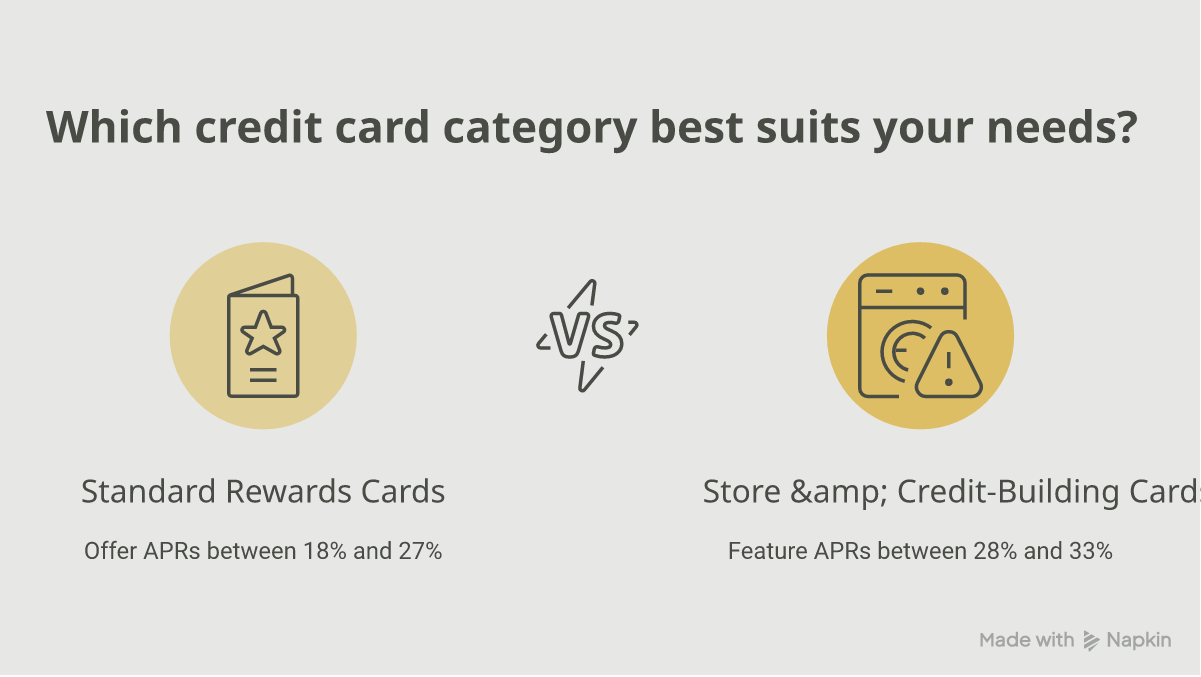
Standard Rewards Cards: These typically offer APRs between 18% and 27%, depending on the borrower's creditworthiness.
Store Credit Cards: These cards are famous for high interest rates. It is very common to see store cards with APRs between 28% and 33%.
Credit-Building Cards: Cards designed for people with "fair" or "poor" credit often have APRs in the 28% to 30% range because the lender is taking on more risk.
Where a 29% APR sits against national averages by card category
The Role of Credit Scores in Your APR
Lenders use your credit score as a primary factor when deciding what APR to offer you. Most credit cards advertise a range of APRs rather than a single number. For example, a card might list an APR of 19.99% to 29.99%.
If you have a high credit score, usually 740 or above, you are more likely to be approved for the lower end of that range. If your score is lower, perhaps in the 620 to 660 range, the lender will likely assign you the 29.99% rate. This is their way of offsetting the statistical risk that a borrower with a lower credit score might miss a payment.
The following data from recent consumer market reports shows how average APRs for new cardholders shift based on credit tiers:
Credit Score Range
Average APR for New Cardholders
760 and above
25.8%
740 to 759
27.3%
660 to 719
29.0%
620 to 659
29.7%
619 and under
30.0%
As the table shows, 29% is actually very close to the average for someone with a "fair" credit score, between 660 and 719. If you fall into this bracket, a 29% offer is a standard market rate. If you have excellent credit, however, receiving a 29% offer suggests you may want to look for a different product that rewards your high score with a more competitive rate.
Different Types of APR on a Single Card
It is a common mistake to assume that a credit card has only one APR. In reality, most cards have several different rates that apply to different types of transactions. Even if your "purchase APR" is 29%, you might face even higher rates for other actions.
Cash Advance APR
If you use your credit card to take out cash at an ATM, you are using a cash advance. These transactions almost always come with a higher APR than standard purchases. It is common for cash advance APRs to be 29.99% or higher, regardless of your credit score. Additionally, cash advances usually do not have a grace period, meaning interest starts accruing the second the cash is in your hand.
Penalty APR
Many credit card agreements include a penalty APR clause. If you miss a payment or a payment is returned, the issuer may raise your interest rate to a penalty level. This rate is frequently 29.99% and can stay in place for several months or until you make a series of on-time payments.
Balance Transfer APR
When you move debt from one card to another, the rate applied to that moved balance is the balance transfer APR. While some cards offer 0% introductory rates for 12 to 21 months, the "go-to" rate after that period ends is often the same as your purchase APR.
Promotional or Introductory APR
Some cards offer a low or 0% APR for a set period after you open the account. This is a common feature on cards designed for people with good credit. If you see an offer for 0% for 15 months followed by a 29% variable APR, the 29% only matters if you fail to pay off the balance before the 15 months expire.
When 29% APR is Acceptable
There are specific scenarios where accepting a 29% APR does not necessarily mean you are making a bad financial choice. The interest rate only costs you money if you carry a balance. If you use the card strategically, the APR becomes a secondary factor.
You Pay in Full Every Month
If you pay your statement balance in full every single month by the due date, the APR is technically irrelevant. Most credit cards offer a "grace period" of at least 21 days between the end of the billing cycle and the due date. During this time, the issuer does not charge interest on new purchases if you paid your previous balance in full. For a "transactor," someone who uses the card for convenience but pays it off, a 29% APR is no more expensive than a 15% APR.
You Are Rebuilding Credit
For someone with a history of bankruptcy, foreclosure, or missed payments, options are limited. In this case, a 29% APR card might be one of the few tools available to help rebuild a credit profile. By using the card for small purchases and paying it off immediately, you can demonstrate responsible credit behavior to the credit bureaus without ever actually paying that 29% interest.
The Card Offers High Rewards
Some store cards or premium rewards cards have high APRs because they offer significant perks, such as 5% cash back at a specific retailer or travel credits. If the value of the rewards significantly outweighs any potential interest, or if you avoid interest entirely, the high APR is a trade-off for the benefits.
How to Avoid the 29% Interest Trap
If you currently have a card with a 29% APR and you are struggling with interest charges, there are several steps you can take to lower your costs.
How to Avoid the 29% Interest Trap
1
Request a Rate Reduction
If your credit score has improved since you first opened the card, you can call the issuer and ask for a lower APR. Many issuers are willing to lower a rate by a few percentage points to keep a customer who pays on time. You can mention that you have seen lower offers from other banks to strengthen your position.
2
Use a Balance Transfer Card
For those carrying a significant balance at 29%, moving that debt to a new card with a 0% introductory APR can save hundreds or even thousands of dollars. These cards often charge a 3% or 5% transfer fee, but that cost is usually much lower than paying 29% interest for a year. MoneyAtlas makes it easier to compare balance transfer card offers side by side. For more information about this strategy, read our guide to how credit card balance transfers work.
3
Prioritize Debt Repayment
Using the "debt avalanche" method can be particularly effective here. This involves making the minimum payments on all your debts but putting every extra dollar toward the card with the highest interest rate. By attacking the 29% card first, you reduce the total amount of interest you pay over time.
4
Explore Credit Union Options
Credit unions are member-owned and often have caps on how much interest they can charge. Many credit union cards have APRs that are significantly lower than those from large national banks, even for borrowers with average credit.
Calculating the True Cost of 29%
To understand why a 29% APR is worth avoiding, look at the math over a longer period. Imagine a borrower has a $5,000 balance and makes a fixed payment of $200 every month.
At a 15% APR, it would take 31 months to pay off the balance, and the borrower would pay $1,041 in total interest.
At a 29% APR, it would take 41 months to pay off the balance, and the borrower would pay $3,165 in total interest.
In this scenario, the difference between a "good" rate and a 29% rate is more than $2,000. This highlights why comparing APRs is one of the most important steps when choosing a new financial product.
How to Compare Credit Cards Effectively
When you are looking for a new card, the APR is just one piece of the puzzle. MoneyAtlas reviews and rates cards based on a variety of factors to give you a complete picture. When comparing, look at these four areas:
The APR Range: Don't just look at the lowest advertised rate. Assume you might receive a rate in the middle or high end of the range unless your credit is perfect.
Annual Fees: A card with a 19% APR and a $95 annual fee might be more expensive than a card with a 24% APR and no annual fee, depending on your balance.
Introductory Offers: Look for 0% APR periods on both purchases and balance transfers. These can provide a "safety net" if you need to carry a balance for a few months.
Reward Rates: If you never carry a balance, the rewards, cash back, points, or miles, are more important than the APR.
MoneyAtlas compares over 1,500 products, which allows you to filter cards by your credit score range. This helps you see what a "normal" APR looks like for someone in your specific financial situation.
The Impact of Market Conditions
It is important to remember that most credit card APRs are variable. This means they are tied to a benchmark called the Prime Rate. When the Federal Reserve raises interest rates, the Prime Rate goes up, and your credit card APR will likely follow suit.
If you have a card with a 29% APR today, and the Federal Reserve raises rates by 0.25%, your card's APR will likely increase to 29.25% in the next billing cycle. This is why high APR cards are particularly risky during periods of rising interest rates. The debt becomes more expensive even if you don't spend an extra dime.
Conclusion
A 29% APR is generally not considered a "good" rate for the average consumer, as it sits well above the national average of approximately 21%. However, for those with limited credit history or lower scores, it may be the primary option available to begin rebuilding credit. The most important factor is not the number itself, but how you handle the account. If you pay your balance in full every month, the 29% rate remains a theoretical cost that you never actually pay. If you expect to carry a balance, however, seeking a card with a lower rate or a 0% introductory offer is a much smarter financial move.
Check your current credit score to see which APR range you likely qualify for.
Review your current card statements to identify any 29.99% penalty or cash advance rates.
Compare your current card against the latest offers on MoneyAtlas to see if you could save by switching.
Avoid carrying a balance on any card with an APR near 30% to prevent rapid debt growth.
If you are ready to see if you can qualify for a better rate, use the best credit card comparison tools to browse cards filtered by credit score and interest rate.
FAQ
Ready to pick a card?
Compare the cards our editors rate highest right now, side by side, with the fees and rewards that matter.
Should I get an American Express Gold card? Explore the 4X rewards on dining and groceries vs. the $325 fee to see if this premium card fits your budget.
Learn how to get the American Express Gold Card with our guide on credit score requirements, income, and the 'Apply with Confidence' tool. Apply today!