How Much Money Is on a Gold American Express Card?


Introduction
The question of how much money is on an American Express Gold Card usually refers to one of two things: the spending limit available to the cardholder or the total value of the rewards and credits built into the card. Unlike a traditional credit card, the American Express Gold Card is primarily a charge card, which means it does not have a fixed credit limit in the conventional sense. Instead, it offers flexible spending power that adjusts based on several factors. MoneyAtlas tracks these unique card structures to help you understand how they differ from standard revolving credit lines. This post covers the mechanics of the "no preset spending limit" feature, the $424 in annual credits available to cardholders, and how the earning rates impact the overall financial value of the card. Understanding these components is essential for anyone comparing premium travel and dining cards to determine if the annual fee aligns with their spending habits.
The Concept of No Preset Spending Limit
The American Express Gold Card operates with no preset spending limit, which is often misunderstood as having an "unlimited" balance. This is not the case. While you will not see a specific credit limit like $5,000 or $10,000 on your monthly statement, American Express still monitors your spending capacity closely. Your "limit" is a fluid number that the issuer calculates behind the scenes.
This flexible limit is determined by your personal financial profile and history with the issuer. American Express looks at your credit score, your income, and your previous spending patterns on the card. Most importantly, they look at your payment history. Because the Gold Card is a charge card, the expectation is that the balance is paid in full each month. If you consistently spend $2,000 a month and pay it off, your spending power will likely remain stable or grow. If you suddenly attempt a $20,000 purchase, the transaction may be declined if it falls too far outside your established pattern.
Cardholders can use the "Check Spending Power" tool in the American Express app to verify if a large purchase will be approved. This is a practical way to manage the ambiguity of a charge card. If you are planning to buy a high-ticket item, such as a luxury watch or a large furniture set, entering the amount into this tool provides an immediate "yes" or "no" without impacting your credit score. This tool helps prevent the embarrassment and frustration of a declined card at the point of sale.
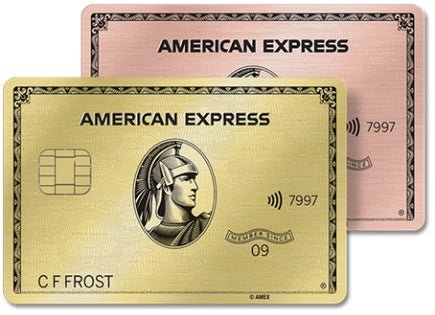
Total Potential Value: The Credits and Rewards
When people ask "how much money is on" this card, they are often looking for the total dollar value of the perks. The American Express Gold Card carries a $325 annual fee, which can feel steep. However, the card is designed to provide a series of "money-back" opportunities through statement credits. If a cardholder uses every available credit, the total annual value reaches $424.
The $120 Dining Credit
This credit is distributed as $10 per month in statement credits. It is not a lump sum of $120 that you can spend at once. To receive the money, you must use your Gold Card at specific participating partners. Currently, these include Grubhub, The Cheesecake Factory, Goldbelly, Wine.com, Five Guys, and Buffalo Wild Wings. Note that enrollment is required through the American Express website to activate this benefit.
The $120 Uber Cash Credit
Similar to the dining credit, this is delivered as $10 in Uber Cash each month. To access this money, you must add your Gold Card to your Uber account. This credit can be used for Uber rides in the United States or for Uber Eats orders. Any unused portion of the $10 expires at the end of the month, so it does not roll over.
The $100 Resy Credit
The Resy credit is split into two $50 installments per year. You can earn up to $50 in statement credits from January through June, and another $50 from July through December. This credit applies to eligible purchases made at U.S. restaurants that are part of the Resy platform. For frequent diners who enjoy exploring new restaurants, this provides a direct way to recoup a portion of the annual fee.
The $84 Dunkin' Credit
The newest addition to the card's credits provides $7 per month for use at Dunkin' locations. Like the other credits, this is a "use-it-or-lose-it" monthly benefit. For those who already have a daily coffee habit, this credit effectively functions like a $7 discount on their monthly caffeine spending.
Earning Power: How the Points Add Up
Beyond the credits, the real "money" on the card is found in its Membership Rewards points. Points are the currency of American Express, and the Gold Card is widely considered one of the strongest earners for food-related expenses. You can also review how different credit card rewards structures work before comparing cards.
The card earns 4 points per dollar spent at restaurants worldwide. This applies to up to $50,000 in annual spending. After you hit that $50,000 ceiling, you earn 1 point per dollar for the remainder of the year. If you spend $1,000 a month on dining, you would earn 48,000 points annually. Depending on how you redeem those points, that could represent several hundred dollars in travel or gift card value.
You also earn 4 points per dollar at U.S. supermarkets. This category has a lower cap of $25,000 per calendar year. Once you reach the $25,000 limit, the earning rate drops to 1 point per dollar. For a family spending $500 a week on groceries, hitting this cap is a real possibility. We recommend monitoring your spending toward the end of the year if you are a high-volume grocery shopper.
Travel earnings include 3 points per dollar on flights booked directly with airlines or via the Amex Travel portal. Additionally, the card earns 2 points per dollar on prepaid car rentals through the portal and 1 point on all other purchases. When comparing these rates to other cards, it is clear the Gold Card is specialized for "lifestyle" spending rather than general travel.
Fees and Interest: The Cost of the Card
While the card provides value, it also comes with specific costs that affect the "net money" in your pocket. The most significant cost is the $325 annual fee. This fee is charged on your card anniversary each year. If you do not use the credits mentioned above, the card effectively costs you $325 just to keep it in your wallet. For a broader comparison, browse the best credit card rankings.
The Gold Card also features an interest-bearing option called "Pay Over Time." While it is a charge card, American Express allows cardholders to carry a balance on certain purchases with interest. The Annual Percentage Rate (APR) for Pay Over Time is usually a variable rate, often ranging between 21% and 29% based on your creditworthiness.
If you choose to use the Pay Over Time feature, the interest charges will quickly eat into any rewards you have earned. For example, if you earn 4% back in points but pay 24% in interest on that same balance, you are losing money on the transaction. We believe the Gold Card provides the most value to those who pay their balance in full every month to avoid these interest costs. For more detail, read when credit card interest is charged.
Other fees to watch out for include late payment fees and returned payment fees. Both can be as high as $40. However, the card does not charge foreign transaction fees, making it a viable option for international travel. When you use the card abroad, you won't see the typical 3% surcharge that many other cards apply to non-U.S. purchases.
How Spending Power Affects Your Credit Score
One of the unique aspects of a card with no preset spending limit is how it is reported to credit bureaus. Traditional credit cards have a credit limit, and your "credit utilization" is a major factor in your credit score. If you have a $10,000 limit and a $5,000 balance, your utilization is 50%.
Because the Gold Card does not have a preset limit, it often does not factor into the utilization portion of your credit score in the same way. Most credit scoring models, like FICO, exclude charge cards from the utilization calculation. This can be an advantage if you need to make a large purchase that would otherwise "max out" a traditional card and temporarily lower your score. For additional context, see how closing a credit card can affect your credit score.
However, the total balance is still reported to the bureaus. If you carry a very high balance, even if it doesn't affect utilization, lenders may still see it as a high level of debt when you apply for a mortgage or car loan. It is always important to manage the "money" on your card responsibly, regardless of how the limit is labeled.
How to Compare the Amex Gold to Other Options
Before deciding if the Gold Card is right for you, it is helpful to compare it against other premium cards. Using the MoneyAtlas comparison tools, you can look at the Gold Card side-by-side with cards like the Chase Sapphire Preferred or the Capital One Savor. You can also read our American Express Gold Card review for a product-level evaluation.
Consider the following criteria when comparing:
- The Annual Fee: Can you justify $325 compared to a $95 or $0 fee card?
- The "Real" Credit Value: Do you actually shop at Dunkin' or use Grubhub? If not, the $424 in credits is worth $0 to you.
- Point Redemption: Do you prefer simple cash back or are you willing to learn how to transfer points to airlines for maximum value?
- Spending Habits: Does the majority of your budget go toward groceries and dining out?
For many, a simple cash-back card earning 2% on everything might be more lucrative than a 4% card that requires a $325 fee. On the other hand, for a frequent traveler who eats out often, the Gold Card can provide thousands of dollars in value over several years. Compare alternatives through the cash back credit card comparison.
Steps to Maximize Your Gold Card Value
Steps to Maximize Your Gold Card Value
- 1
Enroll in all credits immediately
Visit the "Benefits" section of your online account or the Amex app. You must manually enroll in the Dining and Resy credits to start receiving statement credits.
- 2
Add your card to the Uber app
This ensures your monthly $10 Uber Cash is automatically deposited into your account at the start of each month.
- 3
Track your supermarket spending
Use your monthly statements to see how close you are to the $25,000 annual cap. If you hit it early, you might consider switching your grocery spending to a different card for the rest of the year.
- 4
Use the "Check Spending Power" tool for big buys
Before making a purchase over $5,000, check the tool to ensure the transaction will be approved and avoid any issues at the register.
Bottom Line
The "money" on a Gold American Express card is not a single number. It is a combination of flexible spending power that adapts to your habits, a suite of monthly credits totaling over $400, and a rewards system that favors those who spend heavily on food. To get the most out of the card, you must be diligent about using the monthly credits and paying your balance in full to avoid interest. If you are ready to compare how this card fits into your broader financial picture, we invite you to compare premium and rewards credit cards.
FAQ
MoneyAtlas Staff
Articles and reviews from the MoneyAtlas editorial team — independent research on credit cards, banking, loans, insurance, and investing.
Related Articles

How Much Is the American Express Gold Card Limit?
Wondering how much American Express Gold Card limit you can get? Learn how its no preset spending limit works and how to grow your purchasing power.

How Good Is the American Express Gold Card?
Wondering how good is the American Express Gold Card? Learn how the 4x food rewards and $424 in credits can outweigh the $325 fee in our expert review.

How to Get the Gold American Express Card: Requirements and Steps
Learn how to get the Gold American Express Card with our guide on credit scores, income requirements, and how to apply without hurting your credit.