How Much Is Gold American Express Card? Fees and Costs


Introduction
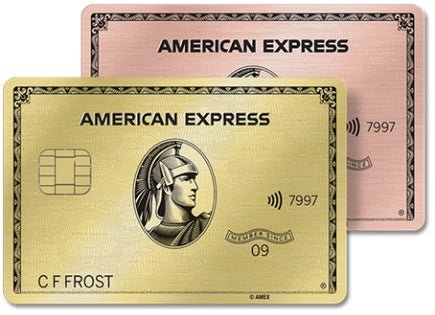
Understanding how much is Gold American Express Card is the first step in deciding if this premium rewards card fits your financial strategy. For many, the initial sticker price is a hurdle, but the actual cost of ownership depends on how well the cardholder uses the various credits and rewards. MoneyAtlas compares dozens of premium cards, and the American Express Gold Card often stands out for its high earning rates on food and travel paired with a mid-tier annual fee.
The American Express Gold Card currently carries a $325 annual fee. While this is significantly higher than a standard no-annual-fee credit card, the total cost involves more than just the yearly charge. You must also consider authorized user fees, potential interest charges for those using flexible payment features, and the opportunity cost of the spending required to earn the welcome bonus. This guide breaks down every expense associated with the card and helps you evaluate the math behind the price.
The Primary Cost: The Annual Fee
The most direct answer to how much is Gold American Express Card is the $325 annual fee. This fee is not waived for the first year under standard public offers. It is a recurring charge that appears on your billing statement shortly after you open the account and on your anniversary date every year thereafter.
Annual fee timing and refunds. The fee is charged in full at the start of your card membership year. If you decide the card is not a good fit, American Express generally offers a 30-day grace period from the date the fee is charged. If you close the account or downgrade the card within those 30 days, the fee is typically refunded. After that 30-day window, the fee is usually non-refundable.
Calculating the monthly cost. To make the $325 figure more manageable, it helps to break it down. The fee equates to roughly $27.08 per month. For someone who spends heavily on dining and groceries, the points earned often outweigh this monthly cost, but it remains a fixed expense regardless of how much you use the card.
Costs for Additional Card Members
Many people want to share their card benefits with a spouse, partner, or child. Adding "Additional Card Members," often called authorized users, is a common way to pool points into a single Membership Rewards account.
The first five users are free. One of the more competitive aspects of the Gold Card cost structure is the pricing for authorized users. You can add up to five additional people to your account for $0 in additional annual fees. This is a significant advantage compared to the American Express Platinum Card, which charges a flat fee for authorized users.
Costs after the fifth user. If you need to add a sixth person or more, the cost is $35 per year for each additional card. While most households will not reach this limit, it is an important factor for large families or business owners using the personal card for shared expenses.
Beyond the Fee: Interest and Financing Costs
While the American Express Gold Card was traditionally a charge card that required payment in full every month, it now includes features that allow for carrying a balance. These features introduce the potential for interest costs, which can quickly exceed the $325 annual fee.
Pay Over Time
The Pay Over Time feature allows cardholders to carry a balance on eligible purchases of $100 or more, similar to a traditional credit card. This comes with a variable Annual Percentage Rate (APR). While the current APRs are competitive within the premium card market, they often range from 21% to 29% depending on creditworthiness.
Plan It
The Plan It feature lets you select specific large purchases and move them into a fixed payment plan. Instead of standard interest, you pay a monthly fee. This fee is calculated at the time you create the plan and stays the same until the balance is paid off. For someone who needs to finance a large purchase over three to 24 months, this can be a predictable way to manage costs, though it is still an added expense.
Late Fees and Penalty Rates
For additional context on how interest affects rewards cards, see this guide to evaluating credit card annual fees, interest rates, and rewards.
Offsetting the Price: The Credit System
To determine if the $325 fee is "worth it," most people look at the annual credits provided by the card. If you already spend money at the participating merchants, these credits act as a direct discount on the annual fee.
$120 Dining Credit. You can earn up to $10 per month in statement credits when you use your Gold Card at specific partners. These include Grubhub, The Cheesecake Factory, Five Guys, and Buffalo Wild Wings. This requires enrollment. If used every month, it provides $120 in value.
$120 Uber Cash. By adding your Gold Card to your Uber account, you receive $10 in Uber Cash each month. This can be used for Uber rides or Uber Eats orders in the United States. This is a "use it or lose it" benefit that does not roll over to the next month.
$100 Resy Credit. This is a newer addition to the card. It provides up to $100 in statement credits each calendar year for eligible purchases at Resy-affiliated restaurants. It is split into two $50 credits: one for January through June and another for July through December.
$84 Dunkin' Credit. Cardholders can receive up to $7 per month in statement credits for purchases at U.S. Dunkin' locations. Over a full year, this adds up to $84.
The Math of Total Credits. If a cardholder uses every dollar of these credits, the total value is $424.
- Total credits: $424
- Annual fee: $325
- Net gain: $99
You can also review the American Express Gold Card review for a broader breakdown of the card's benefits and costs.
Earning Potential: Rewards as a Cost Offset
The Gold Card is built for high-volume spenders in two specific categories: groceries and dining. The points you earn act as a rebate on your spending, which helps justify the annual price.
- 4X points at Restaurants: This applies worldwide on up to $50,000 in purchases per year.
- 4X points at U.S. Supermarkets: This is capped at $25,000 in purchases per year.
- 3X points on Flights: Only for flights booked directly with airlines or via the Amex travel portal.
- 1X points on other purchases: The baseline for all other eligible spending.
The value of a point. MoneyAtlas generally values Membership Rewards points at 1 cent each when used for travel. However, points can be worth 2 cents or more when transferred to airline partners for high-value flights.
Example spending math. For a household that spends $1,000 a month on groceries and $500 a month on dining, the card would earn 72,000 points per year in those categories alone. At a 1-cent valuation, that is $720 in value. Even after paying the $325 fee, the cardholder is "up" by $395 in rewards value, even before considering the statement credits.
For a wider look at points, miles, and annual fee tradeoffs, read how to evaluate credit card annual fees, interest rates, and rewards.
Transaction Fees and Travel Costs
For travelers, the cost of a credit card often includes hidden fees that pop up during international trips. The American Express Gold Card is designed as a travel-friendly product.
No Foreign Transaction Fees. Many mid-tier cards charge a 3% fee on every purchase made outside the United States. The Gold Card has a $0 foreign transaction fee. For a traveler spending $5,000 on an international vacation, this saves $150 compared to a card that charges these fees.
The Hotel Collection. When booking through the American Express travel portal, staying at a Hotel Collection property for at least two nights provides a $100 on-property credit. This credit can be used for dining, spa services, or resort activities. While this is not a cash saving on the card fee itself, it reduces the "out-of-pocket" cost of your trip.
Travelers can compare alternatives through MoneyAtlas travel credit card comparisons.
Welcome Bonus: The Hidden "Cost" of Entry
Most new applicants are eligible for a welcome bonus, which often ranges from 60,000 to 100,000 Membership Rewards points. While this is a massive benefit, there is a "cost" in terms of the required spending.
Spending requirements. A typical offer requires spending $8,000 on eligible purchases within the first 6 months of account opening. For some, this is a natural amount of spending. For others, it might require shifting all household expenses to one card or timing the application with a large purchase like a home repair or new appliance.
Opportunity cost. While you are working toward an $8,000 goal on the Gold Card, you are not earning rewards on other cards you may own. However, given that the Gold Card earns 4% back in points on common categories like groceries, the opportunity cost is usually low compared to the value of the bonus, which could be worth $1,000 or more in travel.
How to Compare the Cost Against Other Cards
When asking how much is Gold American Express Card, it is useful to compare it to the "next step up" and the "step down" in the American Express ecosystem.
The Gold Card sits in a unique middle ground. It is more expensive than a standard $95 card but offers significantly better earning potential for daily life than the $695 Platinum Card, which is heavily focused on airport lounges and luxury travel.
Compare the Gold Card with other products using the best credit cards comparison.
Step-by-Step: Evaluating if the Cost Fits You
Evaluating if the Cost Fits You
- 1
Review your last three grocery bills
Calculate your average monthly spend at U.S. supermarkets. Multiply by 12, then by 4% to see your annual point yield.
- 2
Audit your dining habits
Look at how often you eat out or order delivery. Use the same 4% calculation for these expenses.
- 3
Check your "Credit Compatibility"
Ask yourself if you already use Uber, Grubhub, Resy, or Dunkin'. If you have to change your behavior to use these credits, they are worth less than their face value.
- 4
Evaluate your travel plans
If you do not plan to use Membership Rewards points for travel, the value of the points drops significantly. Using points for cash back or statement credits usually results in a value of 0.6 cents per point, which may not justify the $325 fee.
- 5
Compare side-by-side
Use a tool to compare the Gold Card against a cash-back credit card comparison. If the extra rewards from the Gold Card do not exceed $325 more than the no-fee card's rewards, the no-fee option is the smarter financial choice.
Understanding the "Once per Lifetime" Rule
A critical part of the Gold Card cost is the "once per lifetime" welcome bonus rule. American Express generally only allows a person to earn a welcome bonus on a specific card once. If you have had the Gold Card or its predecessor, the Premier Rewards Gold card, in the past, you likely cannot earn the 60,000+ point bonus again.
This rule makes the timing of your application important. If you apply when the bonus is at a historical high, the value you receive in the first year can pay for several years of the annual fee. If you apply when the bonus is low, the "cost" of the card in the long run is higher because you have missed out on that initial influx of points.
Managing the Cost of Membership
The total cost of the Gold American Express Card is more than just a single number. It is a combination of a $325 annual fee, potential interest if you use financing features, and the effort required to manage monthly credits.
For the person who eats at home and out frequently, the card acts as a high-performance tool that turns every meal into travel currency. For someone who does not value travel rewards or prefers a simple cash-back structure, the $325 fee may be a significant drag on their finances. MoneyAtlas helps you compare these tradeoffs so you can choose the card that aligns with your actual spending habits.
For more guidance on comparing fee, APR, and reward tradeoffs, explore credit card annual fees, interest rates, and rewards.
FAQ
MoneyAtlas Staff
Articles and reviews from the MoneyAtlas editorial team — independent research on credit cards, banking, loans, insurance, and investing.
Related Articles

How Much Is the American Express Gold Card Limit?
Wondering how much American Express Gold Card limit you can get? Learn how its no preset spending limit works and how to grow your purchasing power.

How Good Is the American Express Gold Card?
Wondering how good is the American Express Gold Card? Learn how the 4x food rewards and $424 in credits can outweigh the $325 fee in our expert review.

How to Get the Gold American Express Card: Requirements and Steps
Learn how to get the Gold American Express Card with our guide on credit scores, income requirements, and how to apply without hurting your credit.