How Much Is American Express Gold Card? Costs and Value


Introduction
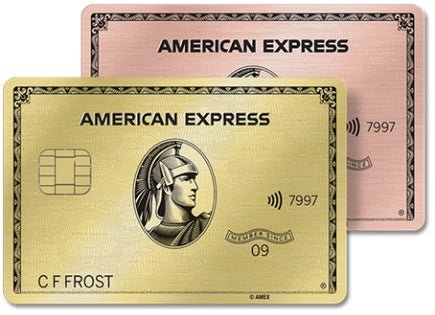
The primary cost associated with the American Express Gold Card review is its $325 annual fee. This premium card is designed for consumers who spend heavily on dining and groceries, offering a rewards structure that aims to offset that yearly expense through statement credits and high point-earning rates. While the $325 sticker price is the main figure to consider, the total cost of ownership also involves understanding interest rates for flexible payment features and the specific requirements for utilizing its built-in credits. MoneyAtlas tracks the latest updates to premium card offerings to help you decide if the value justifies the price tag. This article breaks down the annual fee, the value of the rewards, and the secondary costs of carrying this card. Understanding these figures is the first step toward determining if this card fits your spending habits and financial goals.
Breaking Down the $325 Annual Fee
The $325 annual fee is the standard cost for a primary American Express Gold Card account. Unlike some entry-level cards that waive the fee for the first year, this charge typically appears on your first billing statement after you are approved for the card. It then repeats every 12 months on your anniversary date.
It is helpful to view this cost as roughly $27 per month. For someone who uses the card's features regularly, this monthly breakdown can make the fee feel more manageable compared to a single large payment. However, it is a non-negotiable cost of maintaining the account and accessing its Membership Rewards points and credits.
Fees for Additional Card Members
One way to extend the value of the annual fee is by adding authorized users, which American Express calls Additional Card Members. You can add up to five additional cards to your account with no annual fee. This allows family members or trusted partners to earn points on your behalf. Starting with the sixth additional card, there is a $35 annual fee for each person added.
The 30-Day Cancellation Rule
If you decide the card is no longer a fit for your wallet, there is a specific window for fee refunds. American Express generally offers a 30-day grace period from the date the annual fee is charged. If you cancel the card within this window, the fee is typically refunded. If you cancel after 30 days, the annual fee is usually non-refundable.
How Statement Credits Offset the Cost
To understand the real cost of the American Express Gold Card, you must look at the annual statement credits. If you use every credit provided, the card offers up to $424 in value, which technically covers the $325 annual fee with some room to spare. These credits are not a lump sum. They are distributed in monthly or semi-annual increments.
Monthly Dining and Uber Credits
The card provides two major monthly credits that require active management:
- $120 Dining Credit: This is delivered as $10 in statement credits each month. It is valid at specific partners including Grubhub, The Cheesecake Factory, Five Guys, Buffalo Wild Wings, and Wonder. Enrollment is required through your account.
- $120 Uber Cash: By adding your card to your Uber account, you receive $10 in Uber Cash each month. This can be used for Uber Eats orders or Uber rides in the U.S.
New Additions: Resy and Dunkin' Credits
Recent updates to the card have introduced more ways to recoup the annual fee:
- $100 Resy Credit: This is split into two $50 statement credits per year. You receive up to $50 from January through June and another $50 from July through December when you spend at eligible U.S. Resy restaurants.
- $84 Dunkin' Credit: This provides $7 per month in statement credits for purchases made at U.S. Dunkin' locations.
Reward Earning Potential and Point Value
Beyond the credits, the card's value comes from its ability to earn Membership Rewards points. For many, the points earned on daily spending are what make the $325 fee worth paying. The card is particularly aggressive in food-related categories.
4X Points on Food
The card earns 4X points at restaurants worldwide, including takeout and delivery in the U.S. This 4X rate applies to the first $50,000 in annual purchases, then drops to 1X. It also earns 4X points at U.S. supermarkets on up to $25,000 in purchases per year.
For a household that spends $1,000 a month on groceries and $500 a month on dining, the card would generate 72,000 points per year. At a conservative valuation of 1 cent per point, that is $720 in value.
Travel Earning Rates
While it is primarily a "foodie" card, it does offer travel rewards:
- 3X points on flights booked directly with airlines or through the American Express Travel portal.
- 2X points on prepaid car rentals and cruises booked through the portal.
- 5X points on prepaid hotels booked through the portal.
The Value of a Point
How much the card is "worth" depends on how you redeem your points. If you use points to cover charges on your statement, you often get a value of 0.6 cents per point. If you use them for gift cards or travel through the portal, the value is often around 1 cent per point. The highest value usually comes from transferring points to airline partners like Delta, British Airways, or Air Canada, where points can sometimes be worth 2 cents or more each for international premium cabin flights.
Interest Rates and Other Financial Costs
Because the American Express Gold Card is a premium product, it functions differently than a standard credit card. It is technically a card with No Preset Spending Limit. This does not mean unlimited spending. Your limit adjusts based on your payment history, credit record, and financial resources.
Pay Over Time and APR
While you are generally expected to pay your balance in full each month, the card includes a "Pay Over Time" feature. This allows you to carry a balance on certain purchases with interest. The APR for Pay Over Time is variable and typically ranges from 21% to 29% based on your creditworthiness. For more background, read how APR works on a credit card.
Plan It Feature
Another cost-management tool is "Plan It," which lets you split large purchases into monthly installments with a fixed fee rather than standard interest. This can be a useful way to manage a large expense without the unpredictability of a variable APR, though the fees still represent a cost of borrowing.
Fees to Avoid
To keep the cost of the card strictly to the $325 annual fee, you should be aware of penalty fees:
- Late Payment: Up to $40.
- Returned Payment: Up to $40.
- Foreign Transaction Fees: $0. The Gold Card is a good travel companion because it does not charge extra for purchases made outside the U.S.
The Welcome Offer: An Initial Value Boost
Most new cardholders can offset the first few years of the annual fee through a welcome offer. These offers typically require you to spend a certain amount, such as $6,000 or $8,000, within the first six months of account opening.
In exchange, you may receive 60,000 to 100,000 Membership Rewards points. For someone who can meet the spending requirement through their normal budget, a 60,000-point bonus is worth at least $600 in travel, which effectively covers nearly two years of the $325 annual fee. Learn more about evaluating credit card welcome bonuses and annual fees.
MoneyAtlas suggests checking multiple sources for welcome offers, as different referral links or "apply to know" tools can sometimes show higher point totals for the same spending requirement.
Comparing the Gold Card to Other Options
When deciding if the Gold Card cost is right for you, it is helpful to compare it to other cards in the American Express family and the broader market. You can compare rewards credit cards by annual fee, earning rates, and redemption options.
Gold vs. Platinum
The Platinum Card has a significantly higher annual fee, currently $695. It focuses more on airport lounge access, hotel elite status, and luxury travel credits. If you don't travel frequently but spend a lot on food, the Gold Card's $325 fee often provides a better return on investment.
Gold vs. Blue Cash Preferred
For those who prefer cash back over points, the Blue Cash Preferred Card is worth comparing. It has a much lower annual fee, often around $95 (sometimes waived the first year), and offers 6% cash back at U.S. supermarkets on up to $6,000 in annual spending. If your grocery budget is modest, the lower fee of the Blue Cash Preferred might be more efficient than the Gold Card's $325 fee. Browse cash back credit card comparisons for additional options.
Comparison Checklist
To decide if the Gold Card is worth the cost, ask yourself these questions:
- Do I already spend at least $10 a month on Uber or Uber Eats?
- Do I frequent Dunkin' or the partners in the Dining Credit?
- Is my monthly grocery and restaurant spend high enough to earn significantly more than 32,500 points a year? (This is the "break-even" point at 1 cent per point).
- Am I willing to manage monthly credits to ensure I am getting my money's worth?
How to Apply and Manage Costs
Applying for the Gold Card generally requires a good to excellent credit score, often in the range of 670 to 700 or higher. American Express now offers a "see if you're approved" feature that allows you to check your eligibility without a hard pull on your credit score. If you are approved and choose to accept the card, your score may then be impacted by the hard inquiry.
Steps to Maximize Value
Steps to Maximize Value
- 1
Check for a high welcome offer
Use comparison tools to find the best current point bonus.
- 2
Enroll in all credits immediately
Log in to the American Express app to activate the Dining, Resy, and Dunkin' credits.
- 3
Add the card to Uber
Ensure the Gold Card is a payment method in your Uber app to receive the monthly $10 Uber Cash.
- 4
Set up AutoPay
Avoid late fees by ensuring the balance is paid in full every month.
Is the American Express Gold Card Worth the $325?
For the right person, the American Express Gold Card is one of the most valuable cards on the market. If you are someone who eats out often and handles the grocery shopping for a household, the 4X points accumulate quickly. When you add in the $424 in potential credits, the "effective" annual fee can actually be negative, meaning the card pays you to carry it.
However, if you do not use Uber, don't live near the participating restaurants, or prefer a simple "one-and-done" card without monthly chores, the $325 fee is a high price to pay. The value is not automatic. It requires participation.
MoneyAtlas provides side-by-side credit card comparisons of the Gold Card against its competitors. We suggest using these tools to see how your specific spending patterns would earn rewards on this card versus a no-fee cash back option.
FAQ
MoneyAtlas Staff
Articles and reviews from the MoneyAtlas editorial team — independent research on credit cards, banking, loans, insurance, and investing.
Related Articles

How Much Is the American Express Gold Card Limit?
Wondering how much American Express Gold Card limit you can get? Learn how its no preset spending limit works and how to grow your purchasing power.

How Good Is the American Express Gold Card?
Wondering how good is the American Express Gold Card? Learn how the 4x food rewards and $424 in credits can outweigh the $325 fee in our expert review.

How to Get the Gold American Express Card: Requirements and Steps
Learn how to get the Gold American Express Card with our guide on credit scores, income requirements, and how to apply without hurting your credit.