How Much Is American Express Gold Card Costs and Fees Explained


Introduction
Determining how much the American Express Gold Card costs requires looking at more than just the sticker price on the annual fee. While the headline cost is a significant factor in deciding whether to apply, the true cost of ownership depends on how a cardholder uses the various statement credits and earns rewards on daily spending. This card occupies a middle ground in the premium card market, sitting between entry-level rewards cards and high-cost luxury cards.
MoneyAtlas tracks these costs to help consumers evaluate if a card fits their budget and lifestyle. This guide breaks down the annual fee, authorized user costs, interest rates, and the potential value of the credits that can offset the initial expense. By analyzing these factors side by side, it becomes easier to see the net cost of the card. Choosing the right financial product involves weighing these specific fees against the projected rewards earned from dining and travel.
The Primary Cost: The American Express Gold Card Annual Fee
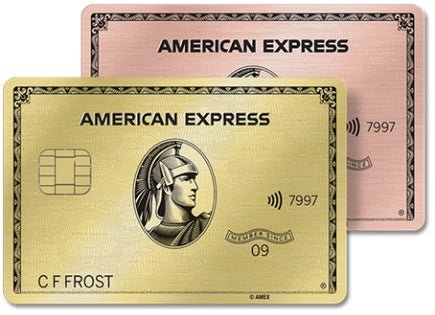
The most direct cost associated with the American Express Gold Card is the $325 annual fee. This fee is not waived for the first year, meaning the first billing statement will typically reflect this charge shortly after the account is opened. Understanding the timing and structure of this fee is the first step in managing the card's impact on a personal budget. For a detailed breakdown of the card's fee structure and benefits, read our American Express Gold Card review.
The annual fee is charged once per year on the anniversary of the account opening. If an account was opened on October 10, the fee will appear on the statement for that period and every subsequent October for as long as the account remains open. It is important to note that the fee is charged in a single lump sum rather than being distributed across twelve months.
A 30 day grace period exists for those who change their minds about the card. If a cardholder decides to close their account or downgrade to a different product within 30 days of the annual fee being charged, American Express typically refunds the fee. After this 30 day window, the fee is generally non-refundable. This policy provides a small window for users to evaluate if the cost remains justifiable for another year.
MoneyAtlas compares over 1,500 products to help users see how this $325 fee stacks up against competitors. While some cards offer lower fees, they often lack the 4X earning multipliers that define the Gold Card. When evaluating the $325 cost, it is helpful to view it as approximately $27 per month, which is a common way to weigh it against recurring monthly expenses like streaming services or gym memberships. Readers can compare the best credit cards to see how annual fees and rewards differ.
Costs for Additional Card Members
For those who want to share the benefits of the card with family members or partners, authorized user costs are a secondary consideration. Adding an "Additional Card Member" allows another person to make purchases on the account, which can help reach spending requirements for welcome offers and accumulate points faster.
The first five authorized user cards have no annual fee. This is a significant benefit for families, as it allows up to six people, the primary cardholder plus five others, to use the account for a single $325 fee. This structure makes the card more cost-effective for households where multiple people are responsible for grocery shopping and dining expenses.
Starting with the sixth authorized user, the cost is $35 per card annually. If a cardholder requires more than five additional cards, this incremental fee will be added to the primary annual fee. Each additional cardholder must be at least 13 years old and have no history of defaulted accounts with the issuer.
The primary cardholder remains responsible for all charges made by authorized users. While there is no extra cost for the first five cards, the financial risk belongs entirely to the main account holder. Most issuers allow the primary user to set individual spending limits for each authorized user, which can range as low as $200, to help manage this risk and control the total monthly bill.
Offsetting the Cost with Statement Credits
The "effective" cost of the American Express Gold Card is often much lower than $325 because of the various statement credits included with the card. For someone who already spends money at the participating merchants, these credits act like a rebate on the annual fee.
The card offers up to $424 in annual value through four distinct credits. If a cardholder maximizes every credit, the card effectively pays for itself and provides an additional $99 in value. However, these credits are distributed monthly or semi-annually and require enrollment, meaning they do not automatically apply to the account without user action.
The $120 Dining Credit requires enrollment through the American Express app or website. Once enrolled, cardholders receive up to $10 back each month when they use the card at participating locations. It is important to note that unused credits do not roll over to the following month. If the $10 is not used by the last day of the month, that portion of the value is lost.
Uber Cash functions similarly to the dining credit but requires linking the card to an Uber account. After the card is added to the Uber app, $10 in Uber Cash is deposited into the account each month. This can be used for rides or food delivery through Uber Eats within the United States. Like the dining credit, this is a use-it-or-lose-it benefit that expires at the end of each month.
The Resy and Dunkin' credits are newer additions that further lower the effective cost. The Resy credit provides $50 between January and June, and another $50 between July and December. The Dunkin' credit provides $7 every month. For regular coffee drinkers or those who dine at restaurants listed on the Resy platform, these are direct subtractions from the card's cost of ownership.
The Value of Rewards Multipliers
Beyond credits, the primary way to "earn back" the cost of the card is through its rewards structure. The card earns Membership Rewards points, which can be redeemed for travel, gift cards, or statement credits. The value of these points is a critical part of the math when deciding how much the card is actually worth. You can compare rewards credit cards to evaluate different earning structures and redemption options.
The card earns 4X points at restaurants and U.S. supermarkets. The 4X multiplier for restaurants applies to up to $50,000 in purchases per year, and the 4X for U.S. supermarkets applies to up to $25,000 per year. After these limits are reached, the rate drops to 1X. For a household spending $1,000 a month on groceries and dining, the card would generate 48,000 points annually.
Travel purchases also earn accelerated rewards. Cardholders earn 3X points on flights booked directly with airlines or through the Amex Travel portal. Additionally, prepaid hotels booked through the portal earn 2X points. While these rates are not as high as the dining multipliers, they contribute to the total points balance for frequent travelers.
The value of Membership Rewards points varies based on how they are redeemed. While a common baseline is 1 cent per point, transferring points to airline or hotel partners can often yield a higher value, sometimes exceeding 2 cents per point. If a cardholder earns 50,000 points in a year and redeems them at a 2% value, that represents $1,000 in travel, significantly outweighing the $325 annual fee.
Understanding Interest Rates and Other Fees
While the annual fee is the most visible cost, other charges can apply depending on how the card is used. The American Express Gold Card is unique because it features both traditional "pay in full" mechanics and modern credit card flexibility. For more background, read this guide to evaluating credit card annual fees, interest rates, and rewards.
The card has no preset spending limit, but this does not mean unlimited spending. A "no preset spending limit" means the amount a cardholder can spend adapts based on their payment history, credit score, and financial resources. This provides more flexibility than a fixed limit but requires the user to be disciplined, as the balance is generally expected to be paid in full each month.
The Pay Over Time feature carries a variable interest rate. For purchases that are not paid in full, the card functions like a traditional credit card. The Annual Percentage Rate for Pay Over Time is competitive with other rewards cards but can significantly increase the cost of ownership if a balance is carried month to month. MoneyAtlas provides tools to compare these APRs against other personal loan or credit options. Readers can review current credit card interest rate information before comparing offers.
There are no foreign transaction fees on the American Express Gold Card. This makes it a cost-effective choice for international travel, as many other cards charge a 3% fee on every purchase made outside the United States. For someone spending $5,000 on an international vacation, the lack of this fee saves $150, which is nearly half the cost of the annual fee.
Late payment and returned payment fees can cost up to $40. To avoid unnecessary costs, cardholders should ensure payments are made by the due date. The card also charges a fee for cash advances, which is usually the greater of $10 or 5% of the amount of each transaction. Because these fees can quickly negate the value of any rewards earned, they are best avoided.
How the Gold Card Cost Compares to Other Options
When deciding if the Gold Card is worth the price, it is helpful to compare it to other cards in the American Express ecosystem and the broader market. The choice often comes down to whether a user prioritizes dining rewards or premium travel perks.
The American Express Platinum Card has a significantly higher annual fee. Currently, the Platinum card carries an annual fee of $895, based on recent data. While it offers more luxury travel benefits like airport lounge access and higher hotel credits, the Gold Card is often the more practical choice for those whose primary spending is on food and groceries.
Lower-fee or no-fee cards may be better for casual spenders. Cards with fees in the $95 range or $0 annual fee cards often provide lower earning rates, such as 1% or 2% back. Readers can compare cash back credit cards or review no annual fee credit card options to see how simpler structures compare.
A simple break-even analysis can clarify the decision. If a cardholder uses none of the statement credits, they would need to spend $8,125 annually in 4X categories, assuming a 1 cent per point value, to cover the $325 fee. However, if they use the $120 dining credit and the $120 Uber Cash, the effective fee drops to $85. In that scenario, they only need to spend $2,125 in 4X categories to break even.
Determining if the Cost Fits Your Budget
The final decision on the American Express Gold Card should be based on a realistic assessment of monthly spending and the ability to use the provided credits. This card is designed for a specific type of consumer: someone who spends heavily on food and is willing to manage monthly credits to maximize value.
Step-by-Step Cost Evaluation
Step-by-Step Cost Evaluation
- 1
Step 1
Review your past three months of bank statements to calculate your average monthly spend at supermarkets and restaurants.
- 2
Step 2
Determine if you already shop at the credit partners like Grubhub, Uber, or Dunkin'.
- 3
Step 3
Subtract the value of the credits you will realistically use from the $325 annual fee to find your "net fee."
- 4
Step 4
Estimate your annual points earning by multiplying your category spend by the 4X or 3X multipliers.
- 5
Step 5
Compare the net fee and rewards potential against other cards using a comparison tool. A structured approach can help you compare credit card annual fees, APRs, and rewards.
Conclusion
The American Express Gold Card costs $325 per year, but for the right user, the actual expense is much lower. By utilizing the $424 in available statement credits and taking advantage of the high earning rates on groceries and dining, it is possible to derive significantly more value from the card than the cost of the fee. However, for those who do not frequent the specific partner merchants or who prefer a simpler cash back structure, the annual fee may be difficult to justify.
Before making a decision, it is worth comparing the Gold Card against other premium rewards options to ensure the fee alignment matches your financial goals. Using MoneyAtlas's credit card comparison can help you visualize these trade-offs and see which card provides the highest return on your specific spending patterns.
FAQ
MoneyAtlas Staff
Articles and reviews from the MoneyAtlas editorial team — independent research on credit cards, banking, loans, insurance, and investing.
Related Articles

How Much Is the American Express Gold Card Limit?
Wondering how much American Express Gold Card limit you can get? Learn how its no preset spending limit works and how to grow your purchasing power.

How Good Is the American Express Gold Card?
Wondering how good is the American Express Gold Card? Learn how the 4x food rewards and $424 in credits can outweigh the $325 fee in our expert review.

How to Get the Gold American Express Card: Requirements and Steps
Learn how to get the Gold American Express Card with our guide on credit scores, income requirements, and how to apply without hurting your credit.