How Much Does an American Express Gold Card Cost?


Introduction
The American Express Gold Card is a prominent fixture in the rewards card market, but its price tag is a common point of hesitation for many applicants. The primary cost is a $325 annual fee, which is charged once per year on the anniversary of the account opening. However, the true cost of carrying this card involves more than just the headline fee. It includes potential interest charges, the cost of adding additional users, and the opportunity cost of spending on this card versus another.
MoneyAtlas helps consumers evaluate these costs side by side with other top-rated credit cards to determine if the math makes sense for their specific budget. This article breaks down every expense associated with the American Express Gold Card, from the annual membership fee to the hidden costs of carrying a balance. We also explore how the card's credits can effectively reduce the out-of-pocket cost if used correctly. Understanding these figures is the first step toward deciding if this card fits into your financial strategy.
The Annual Membership Fee
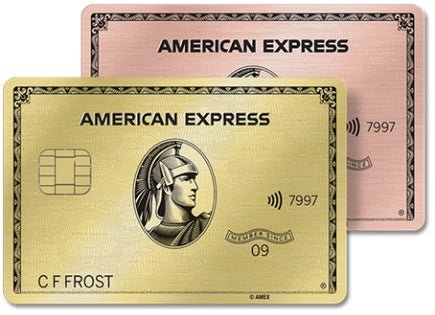
The most direct cost of the American Express Gold Card is the $325 annual fee. This fee is not waived for the first year, meaning it will appear on your first billing statement after you are approved for the card. In terms of market positioning, this price point places the Gold Card between entry-level cards that often charge around $95 and premium "luxury" cards that can cost upwards of $600 or more.
It is helpful to view this $325 fee as a monthly cost of approximately $27. For many, this is comparable to a few streaming subscriptions or a couple of takeout meals. However, unlike a monthly subscription, the full $325 is typically due as a lump sum once a year. If you decide the card is no longer a fit, there is a 30-day grace period following the annual fee charge. If the account is closed or downgraded within those 30 days, the fee is generally refunded.
Costs for Additional Card Members
For those who want to share the benefits of the card with family or partners, there is a specific cost structure for authorized users. American Express refers to these as Additional Card Members.
The first five Additional Card Members can be added to an American Express Gold Card account for $0. This is a significant benefit for households looking to consolidate their spending and maximize rewards across multiple users. Starting with the sixth additional user, there is an annual fee of $35 for each card.
While the first five users do not cost extra in terms of fees, there is a logistical "cost" to consider. The primary cardholder is legally responsible for all charges made by additional users. If an authorized user spends more than anticipated, the primary cardholder must pay the bill to avoid interest and credit score damage. MoneyAtlas suggests that those adding users should use the issuer's tools to set individual spending limits for each additional card to manage this risk.
The Effective Cost: Offsetting Fees With Credits
To understand the actual cost of the American Express Gold Card, it is necessary to look at the "effective" annual fee. This is the amount you pay after subtracting the value of the statement credits provided by the card. A statement credit is essentially a refund applied to your account for eligible purchases.
The card currently offers four primary credits that total up to $424 in potential value each year. If these are used in full, the $325 annual fee is technically covered, resulting in a net gain. However, these credits are restricted to specific merchants and are often distributed in small monthly increments.
The $120 Dining Credit
This credit is distributed as a $10 monthly statement credit. It can be used at specific participating partners, which currently include Grubhub and Seamless, The Cheesecake Factory, Buffalo Wild Wings, Five Guys, and Wonder. Enrollment is required to activate this benefit. If you do not use the $10 in a given month, it does not roll over.
The $120 Uber Cash Credit
Cardholders receive $10 in Uber Cash each month, totaling $120 annually. This can be applied to Uber rides or Uber Eats orders within the United States. To receive this, the Gold Card must be added to the Uber app, and an American Express card must be used for the transaction. Like the dining credit, this is a "use it or lose it" monthly benefit.
The $100 Resy Credit
This is a newer benefit that provides up to $100 in statement credits each calendar year for purchases at U.S. Resy restaurants. This is split into two $50 credits. The first $50 is available from January through June, and the second $50 is available from July through December. For someone who dines out at independent restaurants that use the Resy platform, this is one of the easier credits to utilize.
The $84 Dunkin' Credit
This benefit offers up to $7 in monthly statement credits for purchases at U.S. Dunkin' locations. Over a year, this adds up to $84. While the monthly amount is small, it can offset the cost of a couple of coffees or snacks each month.
Interest Rates and the Pay Over Time Feature
While many people view the American Express Gold Card as a rewards tool, it is also a financial product that carries the cost of interest if not managed carefully. Historically, many American Express cards were "charge cards," meaning they had to be paid in full every month. Today, the Gold Card features a "Pay Over Time" option.
This feature allows cardholders to carry a balance on eligible purchases over a certain amount, similar to a traditional credit card. When you use Pay Over Time, you will be charged an Annual Percentage Rate (APR). These rates are variable and typically range from 21% to 29% based on creditworthiness and the market prime rate.
If you carry a balance, the interest costs will very quickly outweigh any rewards or credits you earn. For example, carrying a $2,000 balance at a 25% APR would cost roughly $40 in interest per month. In just eight months, the interest charges would exceed the $325 annual fee. Using the card as a long-term financing tool is one of the most expensive ways to manage debt.
For more detail on timing and avoiding these charges, read our guide to when credit card interest is charged.
Fees for International Use and Transfers
For travelers, the cost of using a card abroad is a major consideration. Many entry-level cards charge a foreign transaction fee, which is usually around 3% of every purchase made outside the United States.
The American Express Gold Card charges $0 in foreign transaction fees. This makes it a cost-effective choice for international travel, particularly when dining out, as it earns high rewards on restaurants worldwide. Travelers can also compare travel credit cards to review rewards and foreign transaction fee structures side by side.
However, there is a cost associated with transferring the rewards points you earn to airline partners. If you transfer Membership Rewards points to a U.S. airline, American Express charges an excise tax offset fee of $0.0006 per point, up to a maximum of $99. While this fee is relatively small, transferring 50,000 points would cost $30, making it a direct cost that many cardholders overlook.
Late Fees and Penalty Costs
Failing to manage the card according to the terms of the cardmember agreement can lead to additional costs. Like most cards, there are penalties for late payments or returned payments.
- Late Payment Fee: This can be up to $40.
- Returned Payment Fee: This can also be up to $40.
- Penalty APR: If you have repeated late payments, the issuer may increase your APR to a penalty rate, which is often around 29.99%. This higher rate can apply to your account indefinitely, significantly increasing the cost of any debt you carry.
Our guide on how to avoid APR fees on credit card balances covers additional ways to reduce interest costs.
Comparing the Gold Card to Lower-Cost Alternatives
When deciding if the $325 cost is worth it, it is helpful to compare it to other cards in the same category. For instance, several "Blue Cash" cards from the same issuer have no annual fee or much lower annual fees around $95. These cards offer cash back on groceries and gas but do not provide the high-value travel transfer options or the extensive statement credits of the Gold Card. You can browse cash back credit card rankings to compare lower-cost rewards structures.
On the other end of the spectrum, the American Express Platinum Card has an annual fee of $695. While that is significantly higher than the Gold Card's $325, it includes airport lounge access, hotel elite status, and over $1,500 in potential annual credits.
For many consumers, the Gold Card is the "sweet spot" for food-related spending. It offers 4X points at U.S. supermarkets, on up to $25,000 in purchases per year, and 4X points at restaurants worldwide, on up to $50,000 in purchases per year. For a household that spends $1,000 a month on groceries and dining, that is 48,000 points per year. At a conservative valuation of 1 cent per point, those rewards are worth $480, which more than covers the annual fee even before considering the statement credits.
How to Apply and What to Expect
If you decide the cost of the card is justified by your spending habits, the application process is straightforward. Because this is a premium rewards card, it typically requires a good to excellent credit score, which is generally considered to be 670 or higher.
How to Apply for the American Express Gold Card
- 1
Check your credit score
Use a free tool or your current bank's app to ensure your score is in the "Good" to "Excellent" range.
- 2
Compare current offers
MoneyAtlas provides comparisons of current welcome bonuses, which can often be worth $600 to $900 in travel value, effectively covering the first few years of the annual fee.
- 3
Submit your application
You will typically receive a decision in minutes. If approved, the $325 annual fee will be charged to your first statement.
- 4
Enroll in benefits
Immediately upon receiving the card, log into the American Express portal to enroll in the Dining, Resy, and Dunkin' credits. These are not automatic until you click "enroll."
Is the American Express Gold Card Worth the Cost?
The answer depends on two factors: your food budget and your willingness to track monthly credits. If you spend at least $500 per month on groceries and dining out, the points earned will likely exceed the cost of the fee. If you already use Uber and Grubhub, the statement credits make the card almost "free" to carry.
However, if you rarely eat out, prefer shopping at big-box stores like Costco, which often do not count as supermarkets, or find it a chore to track monthly credits, the $325 fee is a high price to pay. In those cases, a no-annual-fee credit card comparison or a simpler travel card may be a better financial fit.
MoneyAtlas provides detailed reviews and side-by-side comparison tools that allow you to plug in your monthly spending and see exactly how much each card will cost you versus how much it will pay you back. Comparing these options is the most effective way to ensure you are not overpaying for a piece of metal in your wallet.
FAQ
MoneyAtlas Staff
Articles and reviews from the MoneyAtlas editorial team — independent research on credit cards, banking, loans, insurance, and investing.
Related Articles

How Much Is the American Express Gold Card Limit?
Wondering how much American Express Gold Card limit you can get? Learn how its no preset spending limit works and how to grow your purchasing power.

How Good Is the American Express Gold Card?
Wondering how good is the American Express Gold Card? Learn how the 4x food rewards and $424 in credits can outweigh the $325 fee in our expert review.

How to Get the Gold American Express Card: Requirements and Steps
Learn how to get the Gold American Express Card with our guide on credit scores, income requirements, and how to apply without hurting your credit.