How Interest Rates Affect Credit Cards and Your Wallet


Introduction
When the Federal Reserve adjusts the federal funds rate, the impact ripples through the economy, eventually reaching your credit card statement. For a broader benchmark, start with our best credit cards comparison so you can see how current offers stack up. Most credit cardholders face a direct link between these national economic shifts and the interest they pay on their monthly balances. Understanding this connection is essential for anyone carrying a balance or looking to open a new line of credit. MoneyAtlas tracks these rate movements to help you understand how they influence your borrowing costs. This article covers the mechanics behind rate changes, how they affect your monthly payments, and what steps are worth considering to mitigate higher costs. By mastering these concepts, you can better compare financial products and choose the tools that align with your financial goals.
The Relationship Between the Fed and Credit Cards
The Federal Reserve, often called the Fed, does not directly set credit card interest rates. Instead, it sets the federal funds rate, which is the interest rate banks charge each other for overnight loans. While this might seem distant from your daily spending, it serves as the foundation for the Prime Rate.
The Prime Rate is the base interest rate that commercial banks charge their most credit-worthy corporate customers. By industry standard, the Prime Rate is usually 3% higher than the federal funds rate. When the Fed raises its benchmark by 0.25%, the Prime Rate typically follows suit within a few days.
Most credit cards are variable-rate products. Their Annual Percentage Rate (APR), which is the yearly cost of borrowing expressed as a percentage, is tied directly to the Prime Rate. If you want a deeper explanation of the term itself, read what APR means in credit card accounts. Your card's APR is usually calculated as the Prime Rate plus a specific margin set by the issuer. For example, if the Prime Rate is 8.5% and your card has a margin of 15%, your total APR would be 23.5%.
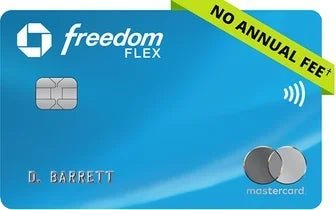
Variable vs. Fixed Interest Rates
Most modern credit cards come with variable rates, but it is helpful to understand the distinction between variable and fixed options.
Variable-Rate APRs
A variable APR fluctuates based on an underlying index, which is almost always the Prime Rate. If the Fed increases rates, your variable APR will likely increase by the same amount. For a closer look at rate changes, see what the current APR for credit cards looks like. These changes can happen without the issuer giving you a 45 day notice because the change is tied to a publicly available index.
Fixed-Rate APRs
Fixed-rate credit cards are increasingly rare in the current US market. Unlike a variable rate, a fixed rate does not automatically move with the Fed. However, "fixed" does not mean the rate can never change. Under the CARD Act of 2009, issuers can still change a fixed rate, but they must provide you with a 45 day advance notice. They also generally cannot apply the new, higher rate to your existing balance unless you are more than 60 days late on a payment.
How Credit Card Interest is Calculated
To understand how interest rates affect your bottom line, you must look at the math behind the monthly bill. Issuers do not just apply the APR to your final balance once a year. They use a daily calculation method.
The Daily Periodic Rate
The first step an issuer takes is converting your APR into a daily periodic rate. This is done by dividing your APR by 365 (or sometimes 360, depending on the bank). For a card with a 24% APR, the daily periodic rate is approximately 0.0657%.
Average Daily Balance
Most issuers use the average daily balance method. They track your balance every single day of the billing cycle, add those daily totals together, and then divide by the number of days in the cycle. This means that if you make a large purchase early in the month, it will result in more interest than if you made that same purchase on the last day of the cycle.
Compounding Interest
Credit card interest often compounds daily. This means the interest charged today is added to your principal balance, and tomorrow’s interest is calculated based on that new, higher amount. Over time, this compounding effect can cause debt to grow significantly if you only make minimum payments.
The Real Cost of a Rate Increase
Small adjustments by the Fed can seem insignificant, but they add up over time, especially for those carrying large balances.
Consider someone carrying a $5,000 balance on a card with a 19% APR. If the Fed raises rates by 0.25% four times in a year, that APR could climb to 20%. While 1% may not feel like much, it changes the trajectory of debt repayment.
As shown in the table, even a 1% difference increases the interest cost and extends the time required to become debt-free. When rates are rising, the gap between the minimum payment and the interest charge narrows, meaning less of your money goes toward the actual principal.
How Falling Rates Impact Your Cards
When the economy slows, the Fed may lower the federal funds rate. This is generally good news for cardholders with variable rates.
When the Fed cuts rates, your APR should drop by a corresponding amount. This decrease reduces the amount of interest that accrues each day. For a broader look at the trend, read whether credit card interest rates are going down in 2026. For someone focused on debt repayment, a falling rate environment is an ideal time to keep monthly payments high. Since the interest charge is lower, a larger portion of every dollar you pay goes directly toward the principal balance.
Other Types of Credit Card APRs
Your card may have several different interest rates, and the Fed’s moves can affect them differently.
- Purchase APR: The rate applied to new purchases. This is the most common rate people track.
- Balance Transfer APR: The rate applied to debt moved from another card. Many cards offer a 0% introductory APR on balance transfers for 12 to 21 months.
- Cash Advance APR: This rate is usually much higher than the purchase APR and often does not have a grace period. Interest begins accruing the moment you take the cash.
- Penalty APR: If you miss payments, an issuer may trigger a penalty APR, which can be as high as 29.99%. This rate is often not tied to the Prime Rate and can stay in place for six months or longer.
Strategies for Managing High Interest Rates
If interest rates are rising or if you are simply paying more than you would like, several strategies are worth comparing to lower your costs.
1. 0% APR Balance Transfer Cards
For those with good to excellent credit (typically a score of 670 or higher), a balance transfer card is often a powerful tool. To compare current offers, use our balance transfer credit cards comparison. These cards offer a promotional period, sometimes up to 21 months, where no interest is charged on transferred balances. While there is usually a balance transfer fee of 3% to 5%, the interest savings often far outweigh the fee.
2. Debt Consolidation Loans
A personal loan for debt consolidation can replace high-interest, variable credit card debt with a fixed-rate loan. For a side-by-side look at repayment options, compare personal loans. This provides a predictable monthly payment and a set end date for the debt. Because personal loans are often fixed-rate, you are protected from future Fed rate hikes.
3. The Debt Avalanche Method
This strategy involves making the minimum payments on all debts while putting every extra dollar toward the card with the highest interest rate. By attacking the most expensive debt first, you reduce the total interest paid over time. This is mathematically the most efficient way to pay down debt when rates are high.
4. Negotiating with Your Issuer
It is sometimes possible to call your credit card company and request a lower interest rate. If you have a history of on-time payments and your credit score has improved since you opened the account, the issuer may lower your APR to keep you as a customer. For more ideas, see how to lower your credit card APR. While not guaranteed, it is a simple step that costs nothing but a few minutes of time.
How to Compare Credit Cards in a High-Rate Environment
When interest rates are high across the board, the criteria for choosing a card change. MoneyAtlas provides comparison tools that allow you to look at more than just the headline APR.
When comparing cards, consider these factors:
- The Margin: Look for cards with a lower margin above the Prime Rate.
- Introductory Offers: A long 0% APR period can provide a necessary buffer while you pay down a balance.
- Fee Structures: High annual fees can negate the benefits of a slightly lower APR.
- Rewards vs. Cost: If you carry a balance, the interest you pay will almost always exceed the value of any cash back or points you earn. In this case, a low-interest card without rewards may be more valuable than a high-rewards card with a high APR.
Using comparison platforms makes it easier to see these terms side-by-side. Instead of looking at a single offer, you can evaluate how different issuers structure their variable rates. For a quick place to start, browse our credit card reviews index.
The Importance of the Grace Period
One of the most effective ways to avoid the impact of interest rates entirely is to utilize the grace period. Most credit cards offer a grace period of at least 21 days between the end of a billing cycle and the payment due date.
If you pay your statement balance in full every month by the due date, the issuer will not charge interest on your purchases. In this scenario, the APR effectively becomes 0% for you. However, the moment you carry even $1 over to the next month, the grace period typically disappears for all new purchases until the balance is fully paid off again.
Step-by-Step: What to Do if Your Rate Increases
What to Do if Your Rate Increases
- 1
Verify the change
Check your monthly statement to see your current APR and compare it to previous months.
- 2
Calculate the impact
Use a calculator to see how much extra interest you will pay each month based on your average balance.
- 3
Evaluate your options
Determine if you qualify for a balance transfer card or a personal loan to lock in a lower rate.
- 4
Adjust your budget
If you cannot move the debt, try to increase your monthly payment to offset the higher interest charges.
- 5
Compare new products
If your current card is no longer competitive, use MoneyAtlas credit card reviews to see whether a better option is available.
The Role of Credit Scores in Interest Rates
While the Fed sets the floor for interest rates, your credit score determines how far above that floor your rate will be. Lenders use your credit score to assess risk.
A borrower with an excellent credit score might receive a card with a margin of 10% above Prime, while someone with a fair score might see a margin of 20% or more. This means that improving your credit score is one of the most effective long-term strategies for lowering your interest rates. Even if the Fed raises rates, a better credit profile could allow you to switch to a card with a much lower margin, potentially resulting in a lower overall APR.
Financial Planning for Future Rate Shifts
The economic landscape is always changing. Rates may be high today and lower next year, or vice versa. A robust financial plan accounts for this volatility.
For those with significant credit card debt, the goal should be to move toward fixed-interest solutions or aggressive repayment. For those who use cards for convenience and rewards, the goal is to maintain a "transactor" status by paying in full every month. This ensures that no matter what the Federal Reserve decides in its next meeting, your daily finances remains shielded from interest costs.
We help users navigate these decisions by providing transparent data on over 1,500 financial products. If you want a broader starting point for comparing cards, explore the best credit cards on MoneyAtlas. Whether you are looking for a card with a low ongoing APR or a long 0% introductory window, comparing your options side-by-side is the most reliable way to find a better deal.
Conclusion
Interest rates on credit cards are closely tied to the broader US economy, specifically the moves made by the Federal Reserve. When the Fed raises rates, borrowing costs for variable-rate cards almost always go up, making it more expensive to carry a balance. Conversely, falling rates can provide some relief, though the benefits are most significant for those who use the opportunity to pay down principal.
Managing these costs requires a proactive approach. By understanding how interest is calculated and which tools are available for debt management, you can minimize the impact of rate hikes. Whether through a balance transfer, a consolidation loan, or simply paying your balance in full, you have several paths to reduce your interest expenses.
The best next step is to review your current credit card statements. If you find your APR is higher than the current market average for your credit score, consider using MoneyAtlas's comparison pages to see if a better option is available.
FAQ
MoneyAtlas Staff
Articles and reviews from the MoneyAtlas editorial team — independent research on credit cards, banking, loans, insurance, and investing.
Related Articles

Which Card Is Better: American Express Gold or Platinum?
Deciding which card is better: American Express Gold or Platinum? Compare fees, 4X dining rewards, and luxury travel perks to find your perfect match.

Should I Get an American Express Gold Card? Breaking Down the Value
Should I get an American Express Gold card? Explore the 4X rewards on dining and groceries vs. the $325 fee to see if this premium card fits your budget.

How to Get the American Express Gold Card: A Practical Guide
Learn how to get the American Express Gold Card with our guide on credit score requirements, income, and the 'Apply with Confidence' tool. Apply today!