How Does an American Express Gold Card Work for Your Finances


Introduction
Deciding whether a premium credit card fits your spending habits requires understanding how its rewards and fees balance out. Many people ask how does an american express gold card work because it occupies a unique middle ground between everyday cards and high-end luxury travel cards. This card focuses heavily on food and travel, offering high reward multipliers for dining and groceries while charging a significant annual fee.
MoneyAtlas compares hundreds of financial products to help you see how these terms play out in real-world scenarios. This article breaks down the card's mechanics, including its flexible spending limits, the point-earning structure, and the list of monthly credits that cardholders use to offset the cost. Understanding these details is the first step toward determining if this card is a helpful addition to your wallet or if a different reward structure would serve you better.
The Basic Mechanics of the Gold Card
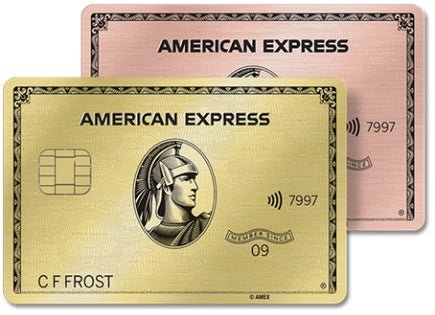
The American Express Gold Card is often referred to as a charge card, though its modern version includes features common to standard credit cards. Historically, a charge card required the balance to be paid in full every single month. While that remains the default expectation for the Gold Card, it now includes the Pay Over Time feature. This allows cardholders to carry a balance on eligible purchases with interest, similar to a traditional credit card.
One of the most distinct features of how this card works is the lack of a preset spending limit. This does not mean spending is unlimited. Instead, the capacity to spend adjusts based on your history, credit record, and financial resources. This flexibility can be helpful for large, one-time purchases that might exceed a fixed limit on a standard card.
The card also operates within the Membership Rewards ecosystem. Instead of earning cash back, you earn points that can be redeemed for travel, gift cards, or transferred to partner loyalty programs. This system is designed for people who want to maximize the value of their spending through strategic travel redemptions rather than simple statement credits. You can review the card's rewards structure in the American Express Gold Card review.
Earning Points on Everyday Spending
The primary reason many people choose the Gold Card is its earning structure. It is widely considered one of the strongest cards for food-related expenses. The card uses a tiered system of multipliers to reward specific types of purchases.
Dining and Restaurants
Cardholders earn 4x points at restaurants worldwide. This includes everything from high-end dining to fast food. In the U.S., this rate also applies to takeout and delivery services. However, there is a cap to consider. The 4x rate applies to the first $50,000 in purchases per calendar year. Once that limit is reached, the earning rate drops to 1x for the remainder of the year.
U.S. Supermarkets
For those who cook at home, the card offers 4x points at U.S. supermarkets. This is a high rate for grocery spending, but it also comes with a limit. The 4x multiplier applies to the first $25,000 spent per calendar year. After hitting that $25,000 ceiling, the rate reverts to 1x. It is important to note that this category generally excludes "big box" stores like Walmart or Target, and wholesale clubs like Costco or Sam's Club.
Travel and Other Purchases
The Gold Card also functions as a travel rewards tool. It earns 3x points on flights booked directly with airlines or through the American Express Travel portal. A more recent update to the card benefits includes 5x points on prepaid hotels booked specifically through the travel portal or travel app. All other eligible purchases that do not fall into these specific categories earn a baseline of 1x points per dollar spent.
Offsetting the Annual Fee with Statement Credits
With a $325 annual fee, the Gold Card is an investment. To make the card mathematically viable, most cardholders rely on a series of statement credits. These credits act as a "rebate" on services you might already use. However, they are distributed monthly or semi-annually and do not roll over, requiring consistent engagement to capture their full value. For a broader breakdown of fee and reward trade-offs, read how to evaluate credit card annual fees, interest rates, and rewards.
The Dining Credit
This benefit provides up to $120 in annual credits, distributed as $10 per month. It applies to purchases made at specific partners, including Grubhub, The Cheesecake Factory, Five Guys, Buffalo Wild Wings, and Wonder. To use this, you must enroll through your online account. If you do not use the $10 in a given month, it expires and cannot be used later.
Uber Cash
Cardholders receive $10 in Uber Cash each month, totaling $120 annually. This can be used for Uber rides in the U.S. or for Uber Eats orders. To activate this, the Gold Card must be added to the Uber app as a payment method. Like the dining credit, this is a monthly "use it or lose it" benefit.
Resy and Dunkin' Credits
Two newer additions to the card's benefit suite are the Resy and Dunkin' credits. The Resy credit offers up to $100 back per year at U.S. Resy restaurants. This is split into two $50 segments: one for the first half of the year and one for the second. The Dunkin' credit provides $7 per month, totaling $84 annually, for use at U.S. Dunkin' locations.
How Redemption and Transfers Work
The value of the points you earn depends entirely on how you redeem them. This is where the Gold Card becomes more complex than a standard cash-back card. Membership Rewards points do not have a fixed value. If you prefer simpler rewards, compare the best cash back credit cards.
Transferring to Partners
The most lucrative way to use points is often by transferring them to airline or hotel partners. American Express has over a dozen partners, including Delta SkyMiles, British Airways Executive Club, and Hilton Honors. Most transfers happen at a 1:1 ratio. By transferring points to an airline and booking a high-value international flight, cardholders can sometimes get significantly more than 1 cent of value per point.
Using the Travel Portal
You can also use points to book travel directly through the American Express portal. When used this way, points are typically worth 1 cent each for flights. However, for hotels or car rentals, the value may be lower.
Statement Credits and Gift Cards
Redeeming points for a statement credit to cover generic purchases is generally the least efficient move. This often results in a value of 0.6 cents per point. Gift card redemptions usually range between 0.7 cents and 1 cent per point depending on the retailer.
Understanding Pay Over Time and Interest
Because the Gold Card is not a traditional credit card, the way interest and payments work is slightly different. Most people are encouraged to pay the "Statement Balance" in full every month to avoid interest charges and maintain a healthy relationship with the issuer. For a plain-language explanation, read what APR means on a credit card and how it works.
If you choose to use the Pay Over Time feature, you are essentially turning a portion of your balance into a traditional credit card loan. The purchases that qualify for this feature will accrue interest at a variable Annual Percentage Rate (APR). As of recent data, these rates are often competitive with other premium rewards cards but can be high. MoneyAtlas tracks current rates and fee structures to help you compare these costs against other market options.
The "Plan It" feature is another way to manage large purchases. It allows you to move a specific purchase of $100 or more into a fixed-payment plan with a monthly fee instead of standard interest. This can make a large expense more predictable, though it still adds to the total cost of the item.
Is the Gold Card Right for You?
Determining if this card works for your lifestyle requires a look at your monthly budget. Because the annual fee is $325, you need to earn enough rewards or use enough credits to justify that cost.
The Gold Card may be a strong fit if:
- You spend at least $500 per month on groceries and dining.
- You already use Uber or Uber Eats at least once a month.
- You frequently order through Grubhub or visit the participating dining partners.
- You prefer travel rewards and are willing to learn how to transfer points to airlines for maximum value.
The Gold Card might not be the best choice if:
- You rarely eat out or shop at major U.S. supermarkets.
- You prefer the simplicity of cash back without an annual fee.
- You do not want to manage multiple monthly credits.
- You book hotels directly to maintain elite status, as the 5x hotel rate requires using the travel portal.
How to Apply and What to Expect
The application process for the American Express Gold Card is straightforward, but there are some unique rules regarding the welcome bonus. American Express typically has a "once per lifetime" rule. If you have had this specific card before and received a welcome bonus, you may not be eligible for another one.
Eligibility and Credit Score
While American Express does not publish an exact credit score requirement, this card is generally geared toward those with good to excellent credit. This typically means a score in the 670 to 850 range. The issuer also looks at your income and existing debt-to-income ratio to ensure you can manage the spending flexibility the card provides.
The Application Process
How to Apply for the American Express Gold Card
- 1
Check for pre-qualified offers
Using the "Apply with Confidence" tool on the provider's site allows you to see if you are likely to be approved without a hard pull on your credit score.
- 2
Submit the formal application
If you choose to accept the offer after the initial check, a hard inquiry will be performed, which may briefly impact your credit score.
- 3
Set up your digital account
Once approved, you can often get a digital card number immediately to start using for online purchases and to add to your Uber account.
- 4
Enroll in benefits
Many of the credits, such as the Resy and dining credits, require you to manually click "Enroll" in your account dashboard before they will apply.
Comparing the Gold Card to Other Options
Before committing to a $325 annual fee, it is worth comparing the Gold Card to other products in the market. The credit card landscape is highly competitive, and other cards might offer similar rewards with different fee structures. Start with MoneyAtlas's best credit card comparison to compare rewards, annual fees, and other features.
The Amex Platinum Card
The Platinum card has a much higher annual fee, currently $695. It focuses more on luxury travel perks like airport lounge access and higher 5x earning on all flights. If you do not travel frequently, the Gold Card's focus on groceries and dining usually provides more daily value.
Blue Cash Preferred from American Express
For those who want groceries rewards without the complexity of points, the Blue Cash Preferred is a strong alternative. It offers 6% cash back at U.S. supermarkets on up to $6,000 per year (then 1%). The annual fee is much lower, making it an easier entry point for casual spenders.
Other Premium Travel Cards
Cards from other major issuers often offer "points" that can be used for travel or cash at a consistent 1 cent per point. These may be better for someone who wants more flexibility and does not want to deal with the "use it or lose it" monthly credits found on the Gold Card. MoneyAtlas provides comparison tools that allow you to put these cards side by side to see which fee and reward structure aligns with your actual spending data.
Maximizing Your Card Value
To get the most out of the Gold Card, you should treat it as a management task. Because the credits are the key to "paying back" the annual fee, missing even two or three months of the Uber or dining credits can turn the card into a net loss for the year. You can also compare no annual fee credit cards if avoiding a recurring fee is a priority.
A 4-step checklist for new cardholders:
- Add the card to your Uber account immediately to start the $10 monthly credit.
- Enroll in the Dining Credit and Resy Credit through the American Express website.
- Use the card for all grocery and restaurant spending up to the annual caps.
- Save your points for high-value travel transfers rather than using them for Amazon purchases or statement credits.
Conclusion
The American Express Gold Card works best for those who can turn their everyday food spending into high-value travel rewards. By offering 4x points on restaurants and groceries, it targets the two largest spending categories for many American households. However, the $325 annual fee requires you to be active in your account management.
To decide if this card is right for you, look at your last three months of bank statements. If your spending at supermarkets and restaurants is high enough that 4x points would significantly outpace a standard 1.5% or 2% cash-back card, the Gold Card is worth a closer look. You can use the comparison tools on MoneyAtlas to see how the Gold Card stacks up against other premium rewards cards based on your specific spending totals.
FAQ
MoneyAtlas Staff
Articles and reviews from the MoneyAtlas editorial team — independent research on credit cards, banking, loans, insurance, and investing.
Related Articles

How to Get the Rose Gold American Express Card
Learn how to get rose gold American Express card designs as a new or existing member. Compare rewards, fees, and follow our easy steps to upgrade today.

Does American Express Gold Card Have Travel Insurance?
Does American Express Gold Card have travel insurance? Discover coverage for trip delays, lost baggage, and car rentals, plus key exclusions to know.

How to Get an American Express Gold Card: Eligibility and Steps
Learn how to get an American Express Gold Card with our guide on credit scores, income requirements, and the Apply with Confidence feature.