How American Express Gold Card Works: A Practical Guide


Introduction
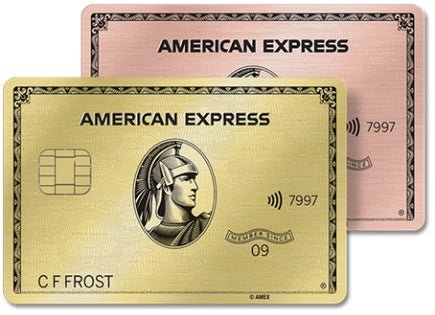
Deciding whether a high-fee rewards card fits your budget requires looking past the flashy metal exterior to understand the underlying math. The American Express Gold Card review is designed primarily for people who spend significantly on dining and groceries. Because it carries a $325 annual fee, the card functions best for those who can offset that cost through specific monthly credits and high-value point multipliers. MoneyAtlas compares hundreds of financial products to help you see how these features stack up against your actual spending habits. This guide breaks down the earning structure, the monthly credit system, and the redemption mechanics to help you determine if this card aligns with your financial goals.
The Core Mechanics of the Gold Card
Understanding how the American Express Gold Card works starts with its classification. While many people refer to it as a credit card, it technically operates with a "No Preset Spending Limit" feature. This does not mean spending is unlimited. Instead, your limit adjusts based on your use of the card, your payment history, and your financial resources.
Most traditional credit cards have a fixed limit, such as $5,000 or $10,000. With the Gold Card, the amount you can spend is fluid. This provides more flexibility for large purchases, but it also means you must be diligent about tracking your balance.
Pay Over Time Feature
Even though the card functions like a traditional credit card today, it evolved from a "charge card" model where the full balance was due every month. Now, American Express includes a Pay Over Time feature. This allows cardholders to carry a balance on eligible purchases with interest, similar to a standard credit card.
The interest rates for Pay Over Time are variable and often sit on the higher end of the market spectrum. For those who prioritize avoiding interest, paying the "statement balance" in full every month is the most effective way to use this card. For additional context, read how current credit card APRs work.
Membership Rewards Points
The card earns American Express Membership Rewards points rather than cash back. This is a critical distinction. Points are a form of digital currency that fluctuates in value depending on how they are used. When you use the card, points are typically deposited into your account after the billing cycle in which the purchase was made. These points do not expire as long as you have at least one active account that earns Membership Rewards.
Accelerated Earning Categories
The primary reason to use the Gold Card is the "4X" earning rate on food. In the world of rewards cards, earning four points for every dollar spent is considered a top-tier rate for these specific categories. You can also compare leading credit card rewards programs to see how different earning structures stack up.
Restaurants Worldwide
The card earns 4X points at restaurants. This includes a wide range of establishments, from high-end fine dining to fast-food chains and local cafes. It also covers takeout and delivery services in the U.S. through platforms like Grubhub or Uber Eats.
There is a cap on this category. Cardholders earn 4X points on up to $50,000 in purchases per calendar year. After you hit that $50,000 threshold, the earning rate drops to 1X point per dollar for the remainder of the year. For most households, a $50,000 annual dining budget is quite high, making this a very accessible ceiling.
U.S. Supermarkets
For many, the most valuable feature is the 4X earning rate at U.S. supermarkets. This category is capped at $25,000 in purchases per calendar year. Once you reach the $25,000 limit, the rate reverts to 1X.
It is important to define what American Express considers a "supermarket." Generally, this includes traditional grocery stores like Kroger, Publix, or Whole Foods. However, it typically excludes "big box" or "superstores" like Walmart and Target. It also excludes wholesale clubs like Costco or Sam's Club. If you do the bulk of your grocery shopping at a superstore, the 4X multiplier may not apply to your purchases.
Travel and Flights
The Gold Card offers 3X points on flights. To earn this rate, you must book the flight either directly with the airline or through the American Express Travel portal. This category is not capped.
While 3X is a solid rate, it is lower than the 5X offered by the more expensive American Express Platinum Card. For a traveler who flies a few times a year, the Gold Card provides a respectable return without the $695 fee of the Platinum tier. You can compare travel rewards cards if travel benefits are a major part of your decision.
Navigating the Monthly Credit System
To justify the $325 annual fee, many cardholders look to the "statement credits" provided with the card. These function like monthly coupons. If you already spend money with the participating merchants, these credits can effectively reduce the out-of-pocket cost of the card. For a broader framework, review how to evaluate credit card annual fees, interest rates, and rewards.
The Uber Cash Credit
Cardholders receive up to $120 in Uber Cash annually. This is distributed in $10 increments each month. You can use this for Uber rides in the U.S. or for Uber Eats orders.
To use this, you must add your Gold Card to the Uber app as a payment method. The $10 credit is "use it or lose it." If you do not use your $10 in January, it does not roll over to February.
The Dining Credit
The card offers another $120 annual dining credit, also distributed as $10 monthly statement credits. This is only valid at specific partners:
- Grubhub (including Seamless)
- The Cheesecake Factory
- Five Guys
- Buffalo Wild Wings
- Wonder
Unlike the Uber credit, which appears as a balance in your Uber account, the dining credit works as a "statement credit." You pay the full bill with your card, and American Express applies a $10 credit to your account a few days later. Manual enrollment is required through the American Express website to activate this benefit.
Resy and Dunkin' Credits
Recent updates to the card added two more credit categories:
- Resy Credit: Up to $100 annually, split into two $50 increments. You get up to $50 from January through June and another $50 from July through December. This is valid at any U.S. restaurant that uses the Resy platform.
- Dunkin' Credit: Up to $84 annually, provided as $7 per month for use at U.S. Dunkin' locations.
If a cardholder uses every single credit offered, they would receive $424 in annual value. This would more than cover the $325 annual fee. However, for someone who does not live near a Dunkin' or never uses Resy, the "real" value of the card may be much lower.
How Point Redemption Works
Earning points is only half the battle. Knowing how to redeem them determines the actual value you get from the card. Membership Rewards points are flexible, but not all redemption options are equal. For more credit card education, browse the MoneyAtlas credit card guides.
High-Value: Transfer Partners
The most effective way to use points is often transferring them to airline or hotel loyalty programs. American Express partners with over 20 programs, including Delta SkyMiles, British Airways Executive Club, and Hilton Honors.
Usually, points transfer at a 1:1 ratio. If you find a "sweet spot" in an airline's award chart, a single point could be worth 2 cents or more. This makes the 4X earning rate on groceries feel more like an 8% return.
Moderate Value: Travel Portal
You can book flights directly through the American Express Travel portal using points. In this scenario, points are generally worth 1 cent each. While this is less than the potential value of transferring to partners, it is simpler and has no blackout dates.
Low Value: Statement Credits and Shopping
You can use points to "Cover Your Charges" (statement credits) or shop at retailers like Amazon. However, this often yields a value of 0.6 cents to 0.7 cents per point. This is generally considered a poor use of points, as it cuts the value of your rewards nearly in half compared to travel redemptions.
Travel Protections and Insurance
While not as robust as a dedicated luxury travel card, the Gold Card includes several protections that are useful for frequent travelers.
Baggage Insurance Plan
If you pay for your entire common carrier fare (plane, train, bus) with the Gold Card, you may be covered if your luggage is lost, stolen, or damaged. Coverage limits are typically up to $1,250 for carry-on bags and up to $500 for checked bags.
Rental Car Loss and Damage Insurance
When you use your card to reserve and pay for a rental car and decline the collision damage waiver at the counter, the card provides secondary coverage. This means it pays for costs not covered by your primary personal auto insurance.
The Hotel Collection
If you book a stay of at least two consecutive nights through the American Express Travel portal at a "Hotel Collection" property, you receive a $100 on-site credit. This credit can be used for qualifying dining, spa, or resort activities. You may also receive a room upgrade at check-in if one is available.
Comparing the Gold Card to Other Options
Before applying, it is helpful to see how the Gold Card fits into the broader market. MoneyAtlas tracks current rates and rewards structures for over 1,500 products to make these comparisons easier. You can browse cash back credit card rankings when comparing the Gold Card with simpler rewards options.
For a consumer who prefers simplicity and zero fees, a basic cash-back card might be a better fit. However, for a household that spends $800 a month on groceries and $400 on dining, the 4X points on the Gold Card can generate over 57,000 points a year. If those points are used for travel, they could be worth more than $1,000, easily outweighing the $325 fee.
What to Know Before You Apply
If the math seems to work in your favor, there are a few practical steps to consider before submitting an application.
Credit Score Requirements
American Express typically looks for "Good" to "Excellent" credit for the Gold Card. Generally, this means a FICO score in the 670 to 850 range. While a high score doesn't guarantee approval, it significantly improves the odds. American Express also uses a "Apply with Confidence" tool that allows you to see if you are pre-approved without a hard pull on your credit report until you formally accept the card.
The Welcome Offer
Most new cardholders can earn a "Welcome Offer" by spending a specific amount of money within the first few months. These offers vary. For example, you might see an offer for 60,000 to 90,000 points after spending $6,000 in the first six months.
It is vital to check the current offer on the provider's site or through a comparison tool. American Express has "once per lifetime" language in its terms, meaning you generally cannot receive a welcome offer for the Gold Card if you have held it in the past.
Managing the $325 Fee
The annual fee is typically charged on your first statement and then once every 12 months thereafter. Unlike some other cards, the Gold Card rarely waives the fee for the first year. You should be prepared to pay this $325 amount shortly after your account opens.
Making the Decision
The American Express Gold Card is not a "one size fits all" product. It is a premium tool for a specific type of spender. To decide if it fits your wallet, follow these steps:
How to Decide If the Amex Gold Card Fits Your Wallet
- 1
Review spending
Review your grocery and dining spending from the last three months to see if you would actually hit the 4X categories regularly.
- 2
Check partners
Look at the list of credit partners (Uber, Grubhub, Dunkin', Resy) and determine how many you already use or would be willing to use.
- 3
Evaluate travel
Evaluate your travel goals. If you do not plan to fly or stay in hotels, the points will be much harder to use effectively.
- 4
Compare cards
Use a comparison platform like MoneyAtlas to see if a different card, such as the Blue Cash Preferred or a travel card from another issuer, offers a better return for your specific spending mix.
By treating the card like a business decision rather than a status symbol, you can ensure that every dollar of the annual fee earns its keep through rewards and benefits.
FAQ
MoneyAtlas Staff
Articles and reviews from the MoneyAtlas editorial team — independent research on credit cards, banking, loans, insurance, and investing.
Related Articles

How Much Is the American Express Gold Card Limit?
Wondering how much American Express Gold Card limit you can get? Learn how its no preset spending limit works and how to grow your purchasing power.

How Good Is the American Express Gold Card?
Wondering how good is the American Express Gold Card? Learn how the 4x food rewards and $424 in credits can outweigh the $325 fee in our expert review.

How to Get the Gold American Express Card: Requirements and Steps
Learn how to get the Gold American Express Card with our guide on credit scores, income requirements, and how to apply without hurting your credit.