What Is the Best Credit Card With Low Interest Rates?


Introduction
Finding the best credit card with low interest rates involves balancing two distinct features: long introductory 0% periods and low ongoing standard rates. Most people search for these cards because they either want to pay off existing debt without interest or they need to finance a large purchase over several months. MoneyAtlas tracks these offers across hundreds of issuers to help clarify which cards provide the most significant savings. This guide explores the different types of low-interest cards, how the mechanics of interest work, and how to evaluate which option fits a specific financial goal. Understanding the difference between a temporary promotional rate and a permanent APR is the first step in choosing the right tool for managing debt, and you can start by browsing our best credit cards comparison.
Understanding the Basics of Credit Card Interest
Before comparing specific cards, it is helpful to understand how interest is calculated and applied. The interest on a credit card is expressed as an Annual Percentage Rate, or APR. This is the yearly interest rate you pay on any balance you carry month to month. If you pay your statement balance in full every month by the due date, you generally do not pay any interest at all because of the grace period.
The grace period is the window of time between the end of a billing cycle and your payment due date. If you carry even a small balance over from the previous month, that grace period usually disappears. At that point, interest begins accruing daily on every purchase you make. If you want a deeper breakdown of the mechanics, read how APR works on a credit card.
Fixed vs. Variable APR
Most modern credit cards use a variable APR. This means the interest rate is tied to an index, typically the U.S. Prime Rate. When the Federal Reserve adjusts interest rates, your credit card APR will likely move in the same direction. A fixed APR stays the same regardless of market fluctuations, but these are extremely rare in the current credit card market.
Different Types of APR
A single credit card often has multiple interest rates. You might see a Purchase APR, a Balance Transfer APR, and a Cash Advance APR. The Purchase APR applies to new things you buy. The Balance Transfer APR applies to debt you move from another card. The Cash Advance APR is usually much higher, often 25% to 30%, and applies when you use your card to get cash at an ATM.

The Two Categories of Low-Interest Cards
When you look for a low-rate card, you are usually looking at one of two categories. Each serves a very different purpose.
0% Introductory APR Cards
These cards offer a promotional period where the interest rate is 0%. These periods typically last between 12 and 21 months. They are most useful for someone who has a specific plan to pay off a balance within that timeframe. For example, if you are buying $3,000 worth of new appliances, an 18-month 0% intro card lets you pay roughly $167 per month to clear the debt without a penny of interest. To understand the fine print, see what 0 APR means in credit card offers.
Low Ongoing APR Cards
These cards do not always offer a 0% period. Instead, they focus on having a standard interest rate that is lower than the national average. While the average credit card APR in the U.S. often hovers above 20%, a low-interest card might offer a rate between 13% and 17%. These are better for people who occasionally carry a balance and do not want to be hit with high interest charges once a promotional window expires.
How to Compare Introductory Offers
Comparing 0% offers requires looking past the 0% headline. Not all introductory periods are created equal. You should look at which transactions the 0% rate applies to and for how long.
- Purchase Intro Periods: This applies to new shopping. It is ideal for financing a wedding, a move, or a major repair.
- Balance Transfer Intro Periods: This applies only to debt moved from another card. This is the primary tool for debt consolidation.
- The Duration: A 15-month window is standard, but some cards offer 18 or 21 months. A longer window gives you a lower required monthly payment to reach a zero balance.
It is common for a card to offer 0% on both purchases and balance transfers, but the lengths might differ. For instance, a card might offer 0% on balance transfers for 18 months but only 12 months for new purchases. MoneyAtlas provides side-by-side comparisons of these specific windows to make the differences clear, including our balance transfer credit card comparison.
The Math of Interest Savings
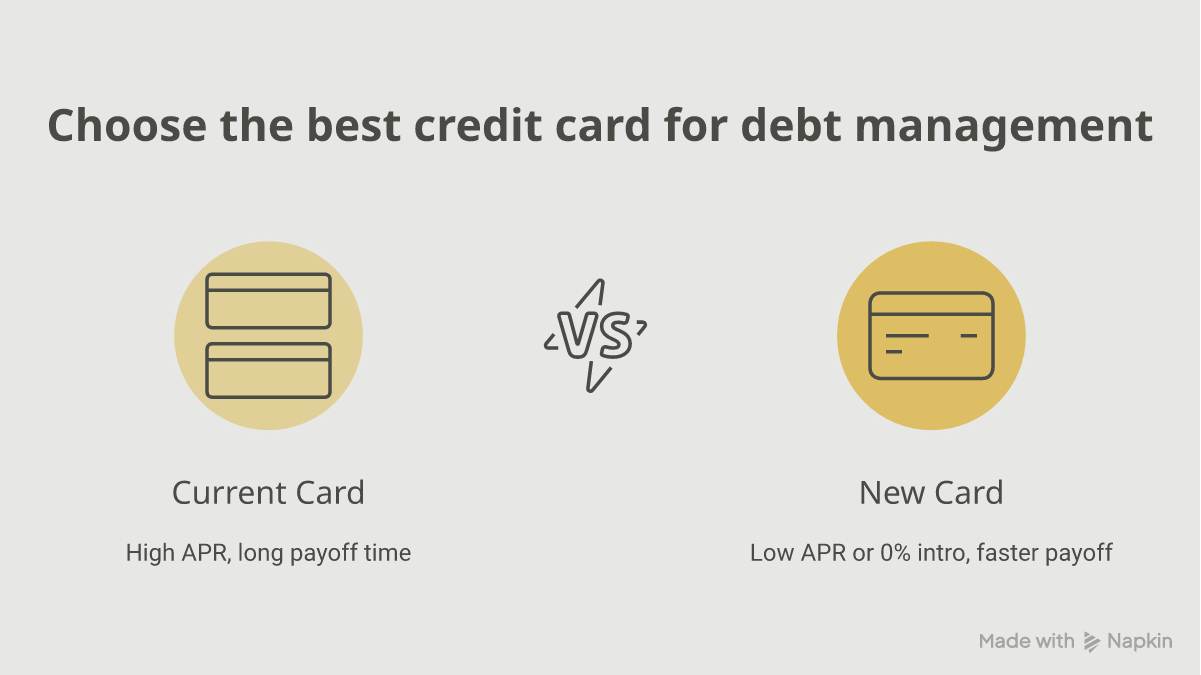
To see why a low-interest card matters, consider someone carrying a $5,000 balance. If their current card has a 24% APR and they pay $200 a month, it will take them 32 months to pay off the debt, and they will pay about $1,780 in interest.
If that same person moves the balance to a card with a 15% APR, they would pay off the debt in 29 months and pay $980 in interest. That is a savings of $800.
If they move that balance to a 0% intro card for 21 months and increase their payment slightly to $238 a month, they would pay $0 in interest and be debt-free in less than two years.
Criteria for Selecting the Best Card
When evaluating options, we look at several factors beyond the interest rate. A "low rate" is only one part of the cost of credit.
The Standard Variable APR
You must look at what happens after the 0% period ends. Every 0% card has a "go-to" rate. This is the APR that will apply to any remaining balance once the promotion expires. If you still owe money after 18 months, and the rate jumps to 28%, your progress could stall. Look for cards where the lower end of the APR range is competitive.
Balance Transfer Fees
Most cards that allow you to move debt charge a fee for the service. This is usually 3% or 5% of the amount transferred. If you transfer $10,000, a 5% fee adds $500 to your balance immediately. You have to calculate if the interest you save over 18 months is greater than the $500 fee. In almost all cases involving high-interest debt, the answer is yes.
Annual Fees
The best low-interest and 0% cards typically have no annual fee. Paying a $95 annual fee for a card designed to save you interest is counterproductive for most people. There are enough $0 annual fee options available that you should rarely need to pay one for a low-rate card, and our no annual fee credit cards comparison is a good place to start.
Rewards vs. Low Rates
There is often a tradeoff between rewards and interest rates. Cards with the highest cash back or travel points usually have the highest interest rates. Conversely, cards with the lowest interest rates often have no rewards programs at all. If you plan to carry a balance, the interest you pay will almost always outweigh the value of any points you earn. For this reason, someone carrying debt should prioritize the lowest APR over the best rewards.
Who Qualifies for the Lowest Rates?
Credit card issuers do not give the same rate to everyone. When you see an APR listed as a range, such as 17.49% to 28.49%, your specific rate depends on your creditworthiness.
- Excellent Credit (740+): Generally qualifies for the lowest end of the APR range and the longest 0% intro periods.
- Good Credit (670-739): Usually qualifies for 0% offers, but might be assigned an APR in the middle of the range once the intro period ends.
- Fair Credit (580-669): May find it difficult to qualify for 0% intro offers. Low-interest options for this group are more likely to be standard cards with no intro period.
Common Traps to Avoid
Low-interest cards are powerful tools, but they require discipline. If used incorrectly, they can lead to more debt rather than less.
The False Sense of Security
A 0% interest rate can make it feel like the debt is not "real" because it isn't growing. This can lead some people to spend more on the card than they can afford to pay off. You must have a plan to clear the balance before the clock runs out.
The Penalty APR
Many cards have a "Penalty APR" clause. If you make a late payment, even by one day, the issuer may cancel your 0% introductory rate and immediately hike your APR to 29.99% or higher. This can happen instantly, turning a low-cost tool into an expensive burden.
Deferred Interest vs. 0% APR
Be very careful with "no interest if paid in full" offers, often found on store credit cards. This is deferred interest, not a 0% APR. If you owe even $1 at the end of the promotional period, the issuer will charge you all the interest that would have accrued from day one. True 0% APR cards from major issuers do not do this; they only charge interest on the remaining balance after the period ends.
Steps to Choosing Your Card
If you have decided that a low-interest card is the right move for your situation, follow these steps to find the best fit.
How to Choose a Low-Interest Credit Card
- 1
Define your goal
Decide if you are trying to pay off existing debt or if you are planning for a future purchase. This determines whether you need a balance transfer offer, a purchase offer, or both.
- 2
Check your credit score
Knowing your score helps you target cards you are likely to get. You can use a free service to see your current standing.
- 3
Calculate your repayment timeline
If you have $4,000 in debt and can pay $250 a month, you need at least 16 months of 0% interest. Look for a card that offers a window longer than your calculated timeline to give yourself a buffer.
- 4
Use a comparison tool
MoneyAtlas allows you to view dozens of low-interest cards side by side. Compare the intro length, the balance transfer fee, and the ongoing APR.
- 5
Review the fine print
Check for the penalty APR terms and the exact date the intro period expires. Marking this date on your calendar is a simple way to stay on track.
Maximizing Your Savings
Once you have the card, the goal is to extract the maximum value while paying the minimum in fees.
Set up Autopay: Even if it is just for the minimum amount, autopay ensures you never miss a payment and risk losing your 0% rate. You can then make manual payments on top of that to bring the balance down faster.
Stop Spending on the Old Card: If you transferred a balance to save on interest, do not start charging new purchases to the old card. This creates a cycle of debt that is hard to break.
Focus on the Principal: With a 0% card, 100% of your payment goes toward the principal balance. This is the fastest way to see your debt shrink. Track your progress monthly to stay motivated.
What to Do If You Don't Qualify
If your credit score is not high enough for a 0% intro card, you still have options. Some credit unions offer cards with low standard APRs that are more accessible to those with average credit. You might also consider a debt consolidation loan, which provides a fixed interest rate and a set payoff date, often with lower rates than a standard credit card. If you want to compare broader credit card choices, start with our best credit cards comparison.
Another option is to negotiate with your current issuer. While they are not required to help, they may be willing to lower your APR temporarily if you have a history of on-time payments.
Conclusion
The best credit card with low interest rates is the one that aligns most closely with your repayment timeline and credit profile. For those with significant debt, a long 0% balance transfer window is often the most effective choice. For those who want a reliable card for occasional balance carrying, a low ongoing APR is the priority. MoneyAtlas makes it easier to evaluate these tradeoffs by providing detailed breakdowns of fees and terms across the market, and the balance transfer card comparison is a smart next step for many readers.
FAQ
MoneyAtlas Staff
Articles and reviews from the MoneyAtlas editorial team — independent research on credit cards, banking, loans, insurance, and investing.
Related Articles

How to Get the Rose Gold American Express Card
Learn how to get rose gold American Express card designs as a new or existing member. Compare rewards, fees, and follow our easy steps to upgrade today.

Does American Express Gold Card Have Travel Insurance?
Does American Express Gold Card have travel insurance? Discover coverage for trip delays, lost baggage, and car rentals, plus key exclusions to know.

How to Get an American Express Gold Card: Eligibility and Steps
Learn how to get an American Express Gold Card with our guide on credit scores, income requirements, and the Apply with Confidence feature.