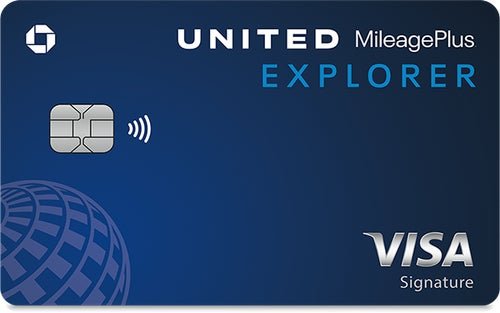
United Explorer Card
Updated October 20, 2026 · By the MoneyAtlas Editorial Team
Why we rate it 4.1/5
Worth the fee if you check a bag on United a couple of times a year; skip it if you rarely fly United.
3x on United purchases and 2x on dining and hotels are fine for a mid-tier airline card, but everyday spending earns just 1x and the miles are locked into MileagePlus.
The $150 fee is waived the first year, and free checked bags for two can cover it on a single round trip.
Primary rental coverage, trip cancellation and baggage insurance, 2 Club passes and a Global Entry credit are strong for the price.
Most partner credits need enrollment, monthly use or a specific booking channel, and the bag perk requires buying the ticket with the card.
Key Takeaways
The Chase United Explorer Card suits one kind of traveler: someone who flies United a few times a year and checks a bag. The annual fee is $0 the first year, then $150. New cardmembers can earn up to 60,000 bonus miles (50,000 after $3,000 in purchases in the first 3 months, plus 10,000 for adding an authorized user). A free first checked bag for you and a companion, 2 United Club passes a year and 3x miles on United purchases carry most of the value. The card also lists over $500 a year in partner credits, but most need enrollment or a specific booking channel, so count only the ones you would use anyway.
Card Overview
Card terms change often. Chase files the full cardholder agreement with the CFPB's credit card agreement database, which is the place to confirm the current APR and fees before you apply.
MileagePlus Earning Rates
United Explorer Card Benefits
The Trusted Traveler credit covers one application fee every four years for Global Entry or TSA PreCheck. Charge the fee directly to the card; applications paid through third-party services don't qualify.
United-Specific Perks
The travel protections are stronger than the fee suggests. Trip cancellation and interruption insurance reimburses up to $1,500 per covered traveler and $6,000 per trip for prepaid, nonrefundable fares. Baggage delay insurance pays up to $100 a day for 3 days once bags are more than 6 hours late, and lost luggage reimbursement covers up to $3,000 per traveler. Auto rental coverage is primary, up to $60,000 for theft and collision on most rentals, so you can decline the counter's collision waiver (New York residents get secondary coverage inside the U.S.). None of this replaces what the airline owes you; the Department of Transportation's air travel consumer pages explain your rights on delays and lost bags. If you'd rather earn points that aren't tied to one airline, Chase Sapphire Preferred transfers to United MileagePlus and other partners.
Annual Fee Worth It?
For two people checking bags, one round trip can cover the fee: Chase puts the savings from two free first bags at up to $200 per round trip, against a $150 fee that doesn't start until year two. A solo traveler saves about half that per trip, so two round trips a year is the more honest break-even. The 2 Club passes (Chase values them at over $100) and the Global Entry credit (about $30 a year spread over four years) sit on top. The partner credits look large on paper, but they only count if you already use Instacart, rideshares, United Hotels or JSX. If you fly United once a year or less, the math rarely works.
United Explorer vs. United Quest vs. United Club Card
The United Quest Card is the step up if you want a second free bag and a realistic path to Premier status through spending. The United Club Card (formerly Club Infinite) only pays off if you would otherwise buy a United Club membership.
Who Should Apply?
Best for: occasional to moderate United flyers (2 to 10 trips a year) who want free checked bags and a couple of lounge visits. Skip it if you fly United 10+ times a year and want regular lounge access (the United Club Card includes a membership), or if you rarely fly United at all (consider the no-fee United Gateway Card instead). Not sure an airline card fits? Compare it with our best travel credit cards.